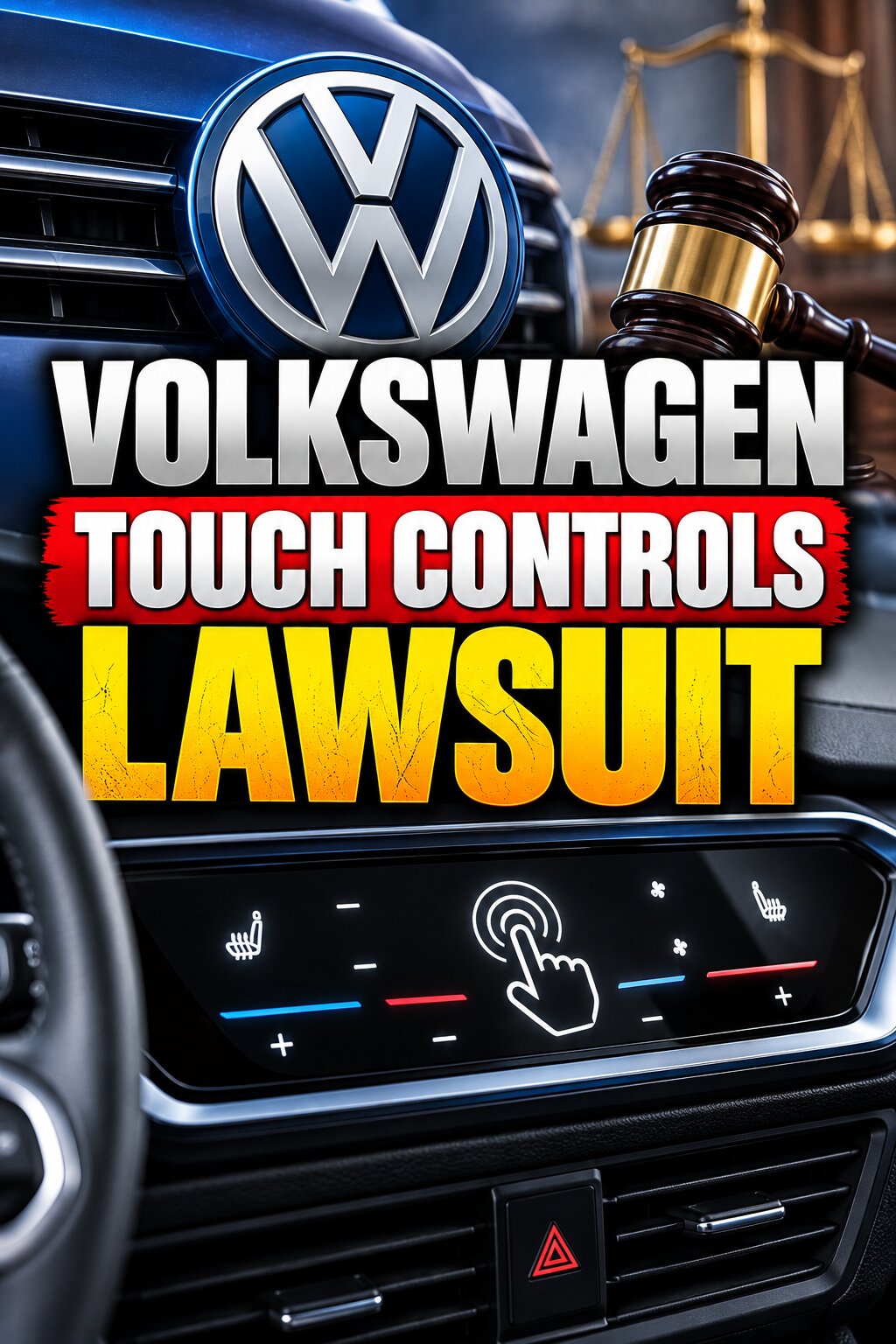
Volkswagen’s decision to replace traditional buttons with touch-sensitive controls was intended to give its vehicles a more modern and technology-focused appearance. Instead, the move generated widespread criticism from drivers, automotive journalists, and safety advocates. Many owners complained that the controls were difficult to use without looking away from the road, overly sensitive, and prone to accidental activation.
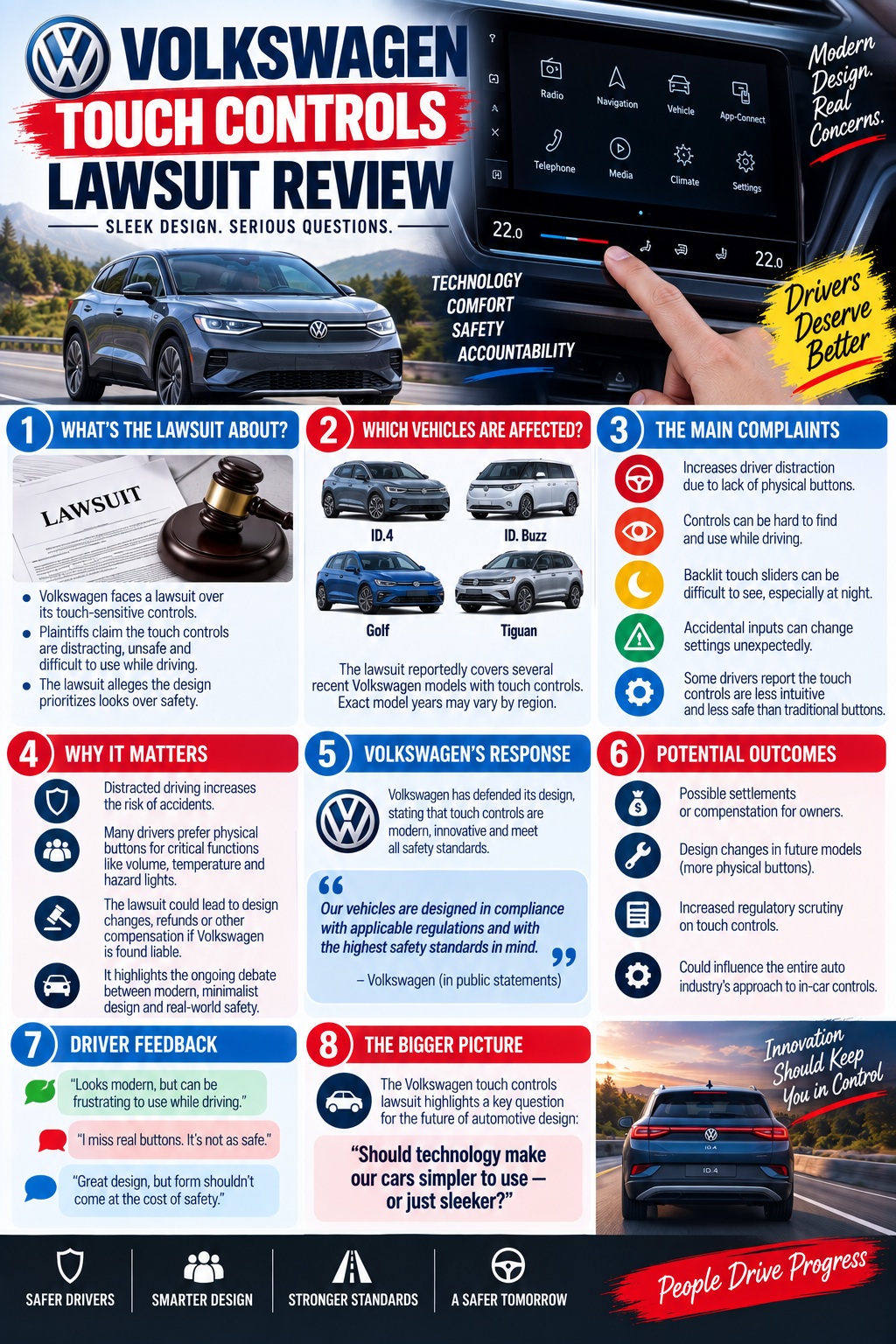
The controversy eventually escalated into legal action. In 2025, Volkswagen became the target of a proposed class-action lawsuit in the United States centered on the touch-sensitive steering wheel controls used in certain Volkswagen vehicles, particularly the ID.4 electric SUV. Plaintiffs allege that the controls are not merely inconvenient but potentially dangerous because they can activate vehicle functions unintentionally.
This article explains the lawsuit, the vehicles involved, the allegations, Volkswagen’s response, and what the case could mean for current and future owners.
Background: Volkswagen’s Shift to Touch Controls
During the late 2010s and early 2020s, Volkswagen embraced a design philosophy focused on digital interfaces and minimalist interiors.
Many vehicles introduced during this period featured:
- Touch-sensitive steering wheel controls
- Haptic feedback buttons
- Touch sliders for climate control
- Large infotainment screens
- Reduced reliance on physical buttons
Volkswagen promoted these systems as part of a futuristic interior design strategy, particularly in its ID-series electric vehicles. The company emphasized technology-driven controls and a cleaner dashboard layout with fewer traditional switches. (Truth in Advertising)
However, many customers found the systems frustrating in everyday use.
Why Drivers Disliked the Touch Controls
Unlike traditional buttons that provide clear tactile feedback, capacitive touch controls react to finger contact with little or no physical movement.
Owners reported several common complaints:
Accidental Activation
Many drivers stated that simply brushing the steering wheel controls could activate functions unintentionally.
Lack of Tactile Feedback
Traditional buttons allow drivers to operate controls by feel.
Touch-sensitive controls often require drivers to look directly at the steering wheel or dashboard.
Difficulty While Turning
Drivers reported accidental contact with steering wheel controls while maneuvering, parking, or making tight turns.
Distracted Driving Concerns
Safety experts have long argued that moving basic vehicle functions into touch interfaces can increase driver distraction.
These concerns eventually became central to the legal action against Volkswagen.
The Volkswagen Touch Controls Lawsuit
In 2025, a proposed class-action lawsuit was filed against Volkswagen Group of America involving touch-sensitive steering wheel controls found in certain Volkswagen vehicles.
The lawsuit focuses primarily on 2021–2023 Volkswagen ID.4 models equipped with capacitive steering wheel buttons. According to court filings, the plaintiffs argue that the controls are excessively sensitive and can activate important driving functions with minimal contact.
Main Allegation
The central allegation is that a light brush of the hand can unintentionally reactivate adaptive cruise control.
According to the lawsuit, this can result in sudden acceleration when the vehicle attempts to return to a previously set cruise-control speed. Plaintiffs claim this creates an unreasonable safety risk, particularly during parking maneuvers and low-speed driving situations. (ConsumerAffairs)
Vehicles Involved
The lawsuit primarily targets:
| Model | Model Years |
|---|---|
| Volkswagen ID.4 | 2021–2023 |
The complaint specifically highlights the capacitive steering wheel controls found in these vehicles.
Some reports have noted that similar controls appeared in other Volkswagen products, including certain Golf and ID-family models, though the legal action focuses on the ID.4. (InsideEVs)
Reported Incidents
The lawsuit cites several incidents involving alleged unintended activation of adaptive cruise control.
Parking Lot Accident
One plaintiff claims that while maneuvering into a parking space, her hand brushed the steering wheel touch control.
According to the complaint, adaptive cruise control resumed operation and the vehicle accelerated unexpectedly, resulting in significant damage to the vehicle and a hand injury. Repair costs reportedly exceeded $14,000.
Garage Collision
Another plaintiff alleges that accidental activation of the steering wheel control contributed to a collision while parking near a garage. The incident reportedly caused property damage and vehicle damage. (HT Auto)
Additional Consumer Complaints
The lawsuit references multiple complaints submitted to the National Highway Traffic Safety Administration (NHTSA).
Many of these complaints describe:
- Unexpected acceleration
- Cruise-control activation
- Parking-related incidents
- Driver confusion regarding touch controls
The plaintiffs argue that these reports demonstrate a broader pattern rather than isolated incidents. (Motor1)
Adaptive Cruise Control and the Lawsuit
A major focus of the case involves adaptive cruise control.
Adaptive cruise control automatically maintains a selected speed and following distance from vehicles ahead. Under normal circumstances, drivers activate the system intentionally.
The lawsuit alleges that the capacitive steering wheel buttons make it possible to resume cruise control accidentally.
If the system returns to a previously stored cruising speed, the vehicle may accelerate even when the driver did not intend to activate the feature. According to the plaintiffs, this is particularly problematic in parking lots and other low-speed environments.
Claims Made Against Volkswagen
The lawsuit includes several allegations against Volkswagen.
Failure to Disclose
Plaintiffs claim Volkswagen knew or should have known about the alleged defect but failed to adequately inform consumers.
Breach of Warranty
The complaint argues that the vehicles do not perform as reasonably expected because of the touch-control design.
Consumer Protection Violations
The lawsuit alleges violations of various consumer-protection laws and warranty statutes.
Economic Damages
Owners seek compensation for:
- Vehicle damage
- Repair expenses
- Reduced vehicle value
- Related losses allegedly caused by the controls
Volkswagen’s Response
Volkswagen has not publicly admitted that the touch controls are defective.
However, the company has acknowledged criticism of capacitive controls and has indicated that future vehicles will move back toward physical buttons for key functions. Several reports note that Volkswagen executives have publicly recognized that customers prefer traditional controls.
Volkswagen has also stated that upcoming models will feature more conventional button layouts rather than relying heavily on touch-sensitive surfaces.
Why Volkswagen Is Returning to Physical Buttons
The controversy surrounding touch controls is not limited to lawsuits.
Automotive reviewers and customers consistently criticized:
- Touch climate controls
- Haptic steering wheel buttons
- Touch sliders
- Menu-heavy infotainment systems
Many drivers reported that physical buttons were easier to locate and operate without taking their eyes off the road.
As a result, Volkswagen announced plans to bring back traditional buttons for critical controls in future vehicles. Industry observers view this as an acknowledgment that the touch-control experiment did not meet customer expectations.
Potential Impact on Owners
Current owners of affected vehicles may wonder whether the lawsuit automatically means their vehicle is unsafe.
Not necessarily.
Many owners have never experienced any issues with the touch-sensitive controls.
However, drivers should remain aware of how adaptive cruise control and steering wheel controls operate.
Recommended Practices
- Avoid resting hands on touch-sensitive controls.
- Familiarize yourself with cruise-control functions.
- Disable adaptive cruise control when not needed.
- Ensure software updates are installed.
- Report unusual vehicle behavior to a dealer.
These steps may help reduce the likelihood of accidental activation.
Could Volkswagen Issue a Recall?
As of now, no nationwide recall specifically addressing the touch-control lawsuit allegations has been announced.
A recall would typically require:
- A regulatory investigation
- Evidence of a safety defect
- Manufacturer action or government intervention
Whether the lawsuit eventually leads to a recall remains uncertain.
Similar Industry-Wide Concerns
Volkswagen is not the only automaker criticized for replacing traditional controls with touch-sensitive interfaces.
Across the automotive industry, manufacturers increasingly shifted toward:
- Touchscreens
- Haptic controls
- Capacitive buttons
Critics argue that these systems can be less intuitive and potentially more distracting than physical controls.
The Volkswagen lawsuit has become one of the most visible examples of the broader debate regarding touchscreen-heavy vehicle design.
What Happens Next?
The lawsuit is still part of an ongoing legal process.
Possible outcomes include:
- Case dismissal
- Settlement agreement
- Class-action certification
- Trial proceedings
- Design modifications
- Compensation programs
The final outcome will depend on court decisions, evidence presented by both sides, and any future actions taken by Volkswagen.
Frequently Asked Questions
What is the Volkswagen touch controls lawsuit about?
The lawsuit alleges that touch-sensitive steering wheel controls in certain Volkswagen ID.4 vehicles are overly sensitive and may unintentionally activate adaptive cruise control, potentially causing unexpected acceleration.
Which Volkswagen vehicles are involved?
The lawsuit primarily focuses on 2021–2023 Volkswagen ID.4 models equipped with capacitive steering wheel controls.
Has Volkswagen admitted the controls are defective?
Volkswagen has not admitted a defect, but the company has announced plans to return to physical buttons in future models after widespread customer criticism.
Did owners report accidents?
Yes. The lawsuit cites incidents involving vehicle damage and alleged unintended acceleration after accidental activation of steering wheel touch controls.
Is there a recall?
At the time of writing, no broad recall specifically tied to the lawsuit allegations has been announced.
Why are touch controls controversial?
Many drivers find them harder to operate without looking away from the road, increasing frustration and potentially contributing to distraction.
Conclusion
The Volkswagen touch controls lawsuit highlights the growing tension between modern digital vehicle design and traditional driver ergonomics. Plaintiffs argue that the touch-sensitive steering wheel controls used in certain Volkswagen ID.4 models are so sensitive that they can unintentionally reactivate adaptive cruise control, creating potential safety hazards.
Volkswagen disputes the allegations, but the controversy has already influenced the company’s future design direction, with a renewed emphasis on physical buttons and more user-friendly controls. As the legal process unfolds, the case may become a significant example of how automakers balance technological innovation with driver safety and usability.