Brake lines are one of the most critical safety components on any vehicle. When a steel brake line rusts, cracks, or develops a leak, many vehicle owners look for a quick repair solution. One option frequently discussed is the use of compression fittings.
However, confusion exists regarding whether compression fittings are legal, safe, or “DOT approved” for brake line repairs. Some mechanics recommend them for emergency repairs, while others strongly discourage their use.
The truth is more nuanced. Understanding federal regulations, DOT requirements, FMVSS standards, and proper brake-line repair methods can help vehicle owners make informed decisions.
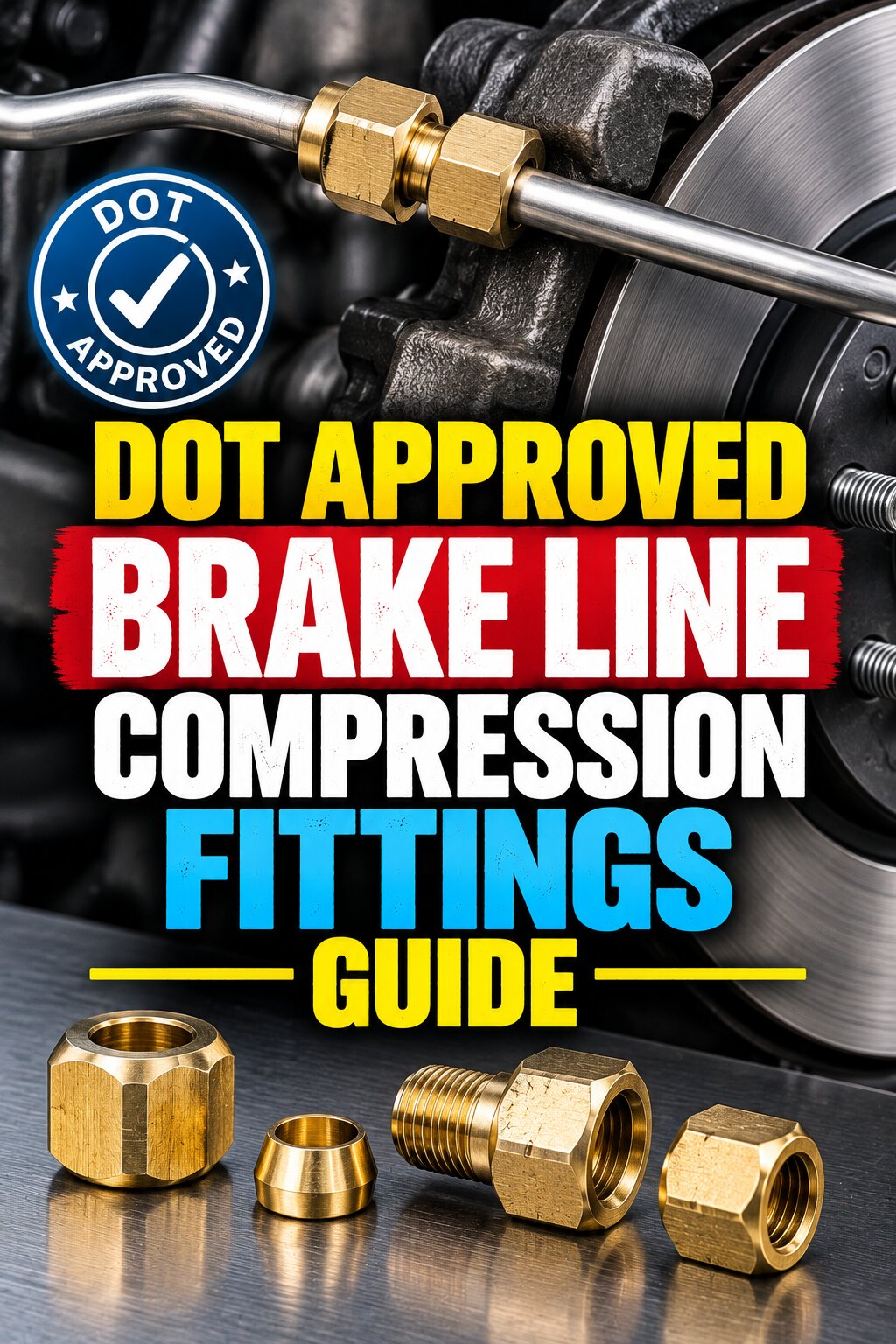
This guide explains what DOT-approved brake line compression fittings are, whether they are legal, how they differ from standard compression fittings, and when they should or should not be used.
What Are Brake Line Compression Fittings?
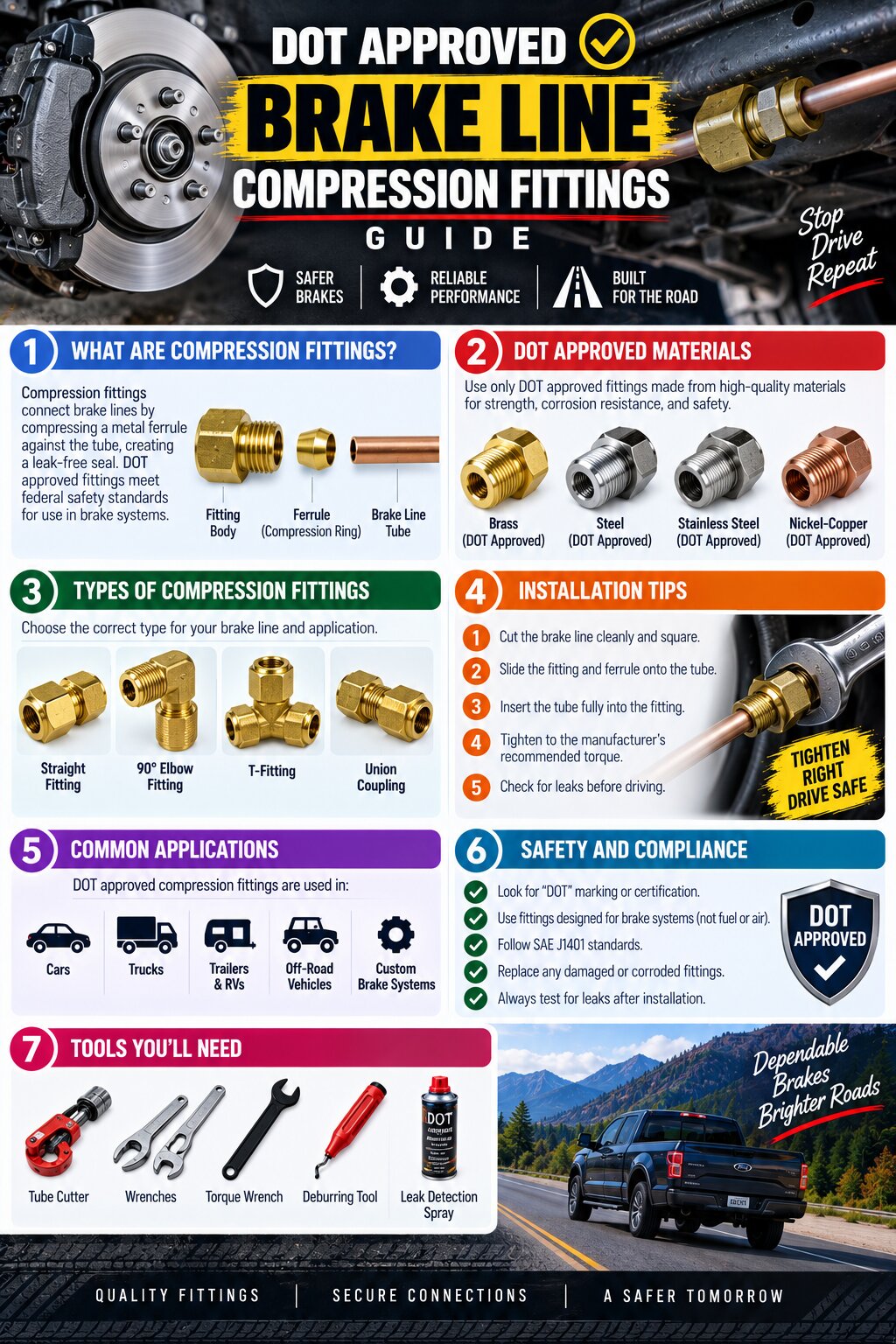
A compression fitting is a mechanical connector designed to join two sections of tubing without flaring the ends.
A typical compression fitting consists of:
- Compression nut
- Compression sleeve (ferrule)
- Union body
When tightened, the ferrule compresses around the tubing to create a seal.
Compression fittings are commonly used in:
- Plumbing systems
- Fuel lines
- Air systems
- Industrial equipment
Some manufacturers also produce fittings specifically designed for brake line repair.
What Does “DOT Approved” Mean?
One of the biggest misconceptions in the automotive industry is the phrase “DOT approved.”
In reality, the U.S. Department of Transportation (DOT) does not individually approve brake fittings, brake hoses, or brake-line repair products before sale. Instead, manufacturers are responsible for certifying that their products comply with applicable federal standards. NHTSA has repeatedly stated that there is no DOT pre-approval process for brake fittings or brake hoses.
When a brake component is marked “DOT,” it generally means the manufacturer certifies that the product complies with applicable Federal Motor Vehicle Safety Standards (FMVSS), particularly FMVSS 106 where applicable. (NHTSA)
Understanding FMVSS 106
Federal Motor Vehicle Safety Standard (FMVSS) No. 106 governs brake hoses, brake hose assemblies, and brake hose end fittings used on motor vehicles. The standard establishes labeling and performance requirements intended to reduce brake-system failures.
Brake-system components used in highway vehicles must meet applicable federal requirements concerning:
- Strength
- Pressure resistance
- Leakage prevention
- Durability
- Identification markings
These standards are designed to ensure reliable brake performance under demanding operating conditions. (Legal Information Institute)
Are Compression Fittings Legal for Brake Lines?
This is where things become complicated.
The Short Answer
Some compression fittings are designed specifically for brake-line repair and may comply with applicable standards.
However, ordinary plumbing compression fittings should never be used on hydraulic brake systems.
Federal regulations governing brake tubing repairs require that brake-line splices use fittings meeting specific automotive standards. For vehicles covered by those regulations, splices installed after March 7, 1989, must use fittings meeting SAE J512 requirements for automotive tube fittings.
Standard Compression Fittings vs Brake-Line Compression Fittings
Not all compression fittings are created equal.
Standard Plumbing Compression Fittings
These are commonly found in:
- Water lines
- Household plumbing
- Low-pressure systems
Characteristics include:
- Brass construction
- Soft ferrules
- Lower pressure ratings
These fittings are not intended for hydraulic brake systems.
Brake-Line Compression Fittings
Automotive brake-line fittings are engineered for:
- High hydraulic pressures
- Vibration resistance
- Temperature changes
- Automotive safety requirements
They are specifically designed to withstand the demands of vehicle braking systems.
Why Brake Systems Are Different
Hydraulic brake systems routinely operate at extremely high pressures.
Under hard braking, hydraulic pressure can exceed:
- 1,000 PSI
- 1,500 PSI
- Even 2,000 PSI in certain situations
A fitting failure can result in:
- Loss of braking power
- Increased stopping distance
- Complete brake failure
For this reason, brake-line repairs must meet much higher standards than ordinary plumbing repairs.
Why Many Mechanics Prefer Double Flares
Most manufacturers recommend replacing damaged sections using:
- New brake tubing
- Proper flare fittings
- Double-flared connections
A double-flared connection creates a metal-to-metal seal that is extremely resistant to pressure and vibration.
Advantages include:
- OEM-style repair
- Proven reliability
- Wide acceptance
- Long-term durability
Many professional technicians still consider double-flaring the preferred brake-line repair method.
DOT Compression Fittings for Brake Repairs
Several manufacturers produce brake-line repair unions marketed for automotive use.
These products are often designed to:
- Meet SAE specifications
- Resist corrosion
- Handle hydraulic braking pressures
- Provide long-term durability
When evaluating a fitting, vehicle owners should verify:
- Intended brake-system use
- SAE compliance
- Manufacturer specifications
- Compatibility with tubing size
Common Uses for Brake Line Compression Fittings
Repairing Rusted Sections
In northern climates, steel brake lines frequently rust.
A compression union may be used to connect:
- Existing brake tubing
- Replacement tubing sections
Emergency Repairs
Some vehicle owners use approved repair fittings to restore brake function until a complete line replacement can be performed.
Hard-to-Reach Areas
Certain vehicle designs make complete brake-line replacement difficult.
In these situations, a properly designed repair fitting may provide a practical solution.
When Compression Fittings Should Not Be Used
Even brake-specific compression fittings are not appropriate for every situation.
Extensive Corrosion
If brake lines are heavily rusted, replacing the entire line is usually the safest option.
Damaged Tubing
A fitting cannot compensate for:
- Crushed tubing
- Severely pitted tubing
- Excessive corrosion
Flexible Brake Hoses
Flexible brake hoses generally should be replaced rather than repaired. FMVSS standards specifically address brake hose assemblies and fittings because of their critical safety role.
Federal Regulations on Brake-Line Connections
Federal regulations require brake tubing and hose connections to:
- Prevent leaks
- Prevent constrictions
- Maintain safe braking performance
- Provide reliable attachment
Regulations also specify that brake-system connections must be adequate in construction and capable of continued proper functioning.
This is why using hardware-store compression fittings is generally considered unacceptable for brake repairs.
Materials Used in Brake Line Fittings
Brass
Common in many repair fittings.
Benefits:
- Corrosion resistance
- Ease of installation
Steel
Often used in OEM-style fittings.
Benefits:
- High strength
- Excellent durability
Stainless Steel
Increasingly popular for premium applications.
Benefits:
- Exceptional corrosion resistance
- Long service life
Signs of a Failing Brake Line Fitting
Drivers should inspect brake repairs periodically.
Common warning signs include:
Fluid Leaks
Any fluid leakage requires immediate attention.
Soft Brake Pedal
A spongy pedal may indicate:
- Air intrusion
- Fluid loss
- Fitting problems
Reduced Braking Performance
Longer stopping distances should never be ignored.
Corrosion Around the Fitting
Rust can eventually weaken tubing and fittings.
Proper Installation Practices
Even the best fitting can fail if installed incorrectly.
Use Correct Tubing Size
Brake tubing commonly uses:
- 3/16 inch
- 1/4 inch
- 5/16 inch
Verify compatibility before installation.
Cut Tubing Squarely
A crooked cut can compromise sealing.
Remove Burrs
Deburr tubing before assembly.
Follow Torque Specifications
Overtightening can damage the fitting.
Undertightening may cause leaks.
Inspect After Installation
Always inspect for:
- Leaks
- Movement
- Proper seating
Copper-Nickel Brake Lines and Compression Fittings
Copper-nickel brake lines have become increasingly popular.
Advantages include:
- Excellent corrosion resistance
- Easier bending
- Longer lifespan
- Easier installation
Many modern repair fittings are compatible with copper-nickel tubing, but manufacturer recommendations should always be followed.
Advantages of Brake-Line Compression Fittings
Faster Installation
No flaring tool required.
Useful for Repairs
Can simplify certain brake-line repairs.
Reduced Labor
Installation is generally quicker than fabricating a new flared connection.
Accessibility
Helpful in tight locations where flaring tools are difficult to use.
Disadvantages of Compression Fittings
Potential Installation Errors
Improper assembly can cause leaks.
Not Universally Accepted
Some technicians prefer traditional flare repairs.
Quality Varies
Not all fittings are designed for brake systems.
Inspection Challenges
It may be difficult to verify proper ferrule compression after installation.
Compression Fittings vs Flared Fittings
| Feature | Compression Fitting | Double-Flared Fitting |
|---|---|---|
| Installation Speed | Fast | Moderate |
| Special Tools Required | Minimal | Flaring Tool |
| OEM Style | No | Yes |
| Long-Term Reputation | Good (quality fittings) | Excellent |
| Repair Difficulty | Easier | More involved |
| Pressure Capability | High | Very high |
Are Compression Fittings Safe?
The safety of a compression fitting depends on:
- Product quality
- Intended application
- Proper installation
- Condition of surrounding brake tubing
A quality automotive brake-line repair fitting installed according to manufacturer instructions can provide reliable service. However, using generic plumbing fittings in a hydraulic brake system creates unnecessary risk.
State Inspection Considerations
Vehicle inspection requirements vary by state.
Some inspection stations may:
- Accept brake-line repair fittings designed for automotive use
- Closely inspect repairs for leakage
- Require proper installation practices
Owners should review local inspection regulations before performing repairs.
Frequently Asked Questions
Are brake line compression fittings DOT approved?
Technically, DOT does not directly approve brake fittings. Manufacturers certify compliance with applicable federal standards rather than receiving DOT approval.
Can I use a plumbing compression fitting on a brake line?
No. Plumbing fittings are not designed for hydraulic brake-system pressures and should not be used.
Are brake line compression fittings legal?
Automotive brake-line repair fittings designed to meet applicable standards may be legal, while generic hardware-store fittings are generally not appropriate for brake systems. Federal regulations require brake-line splices to use fittings meeting specified automotive standards. (GovInfo)
What is the safest brake-line repair?
Replacing the damaged line and using properly flared fittings remains the repair method preferred by most manufacturers and professional technicians.
Do compression fittings leak?
Improperly installed fittings can leak. Correct installation and quality components are essential.
Should I replace the entire brake line instead?
If the line is heavily corroded or damaged in multiple areas, complete replacement is usually the better long-term solution.
Conclusion
DOT-approved brake line compression fittings are often misunderstood. In reality, the DOT does not directly approve brake-line fittings. Instead, manufacturers certify that their products comply with applicable federal safety requirements. When repairing brake lines, it is critical to distinguish between ordinary plumbing compression fittings and automotive brake-line repair fittings designed for high-pressure hydraulic systems.
While quality brake-line compression fittings can provide a practical repair solution in certain situations, complete line replacement with properly flared connections remains the industry-preferred approach. Because brakes are one of the most important safety systems on any vehicle, every repair should prioritize reliability, proper installation, and compliance with applicable automotive standards.