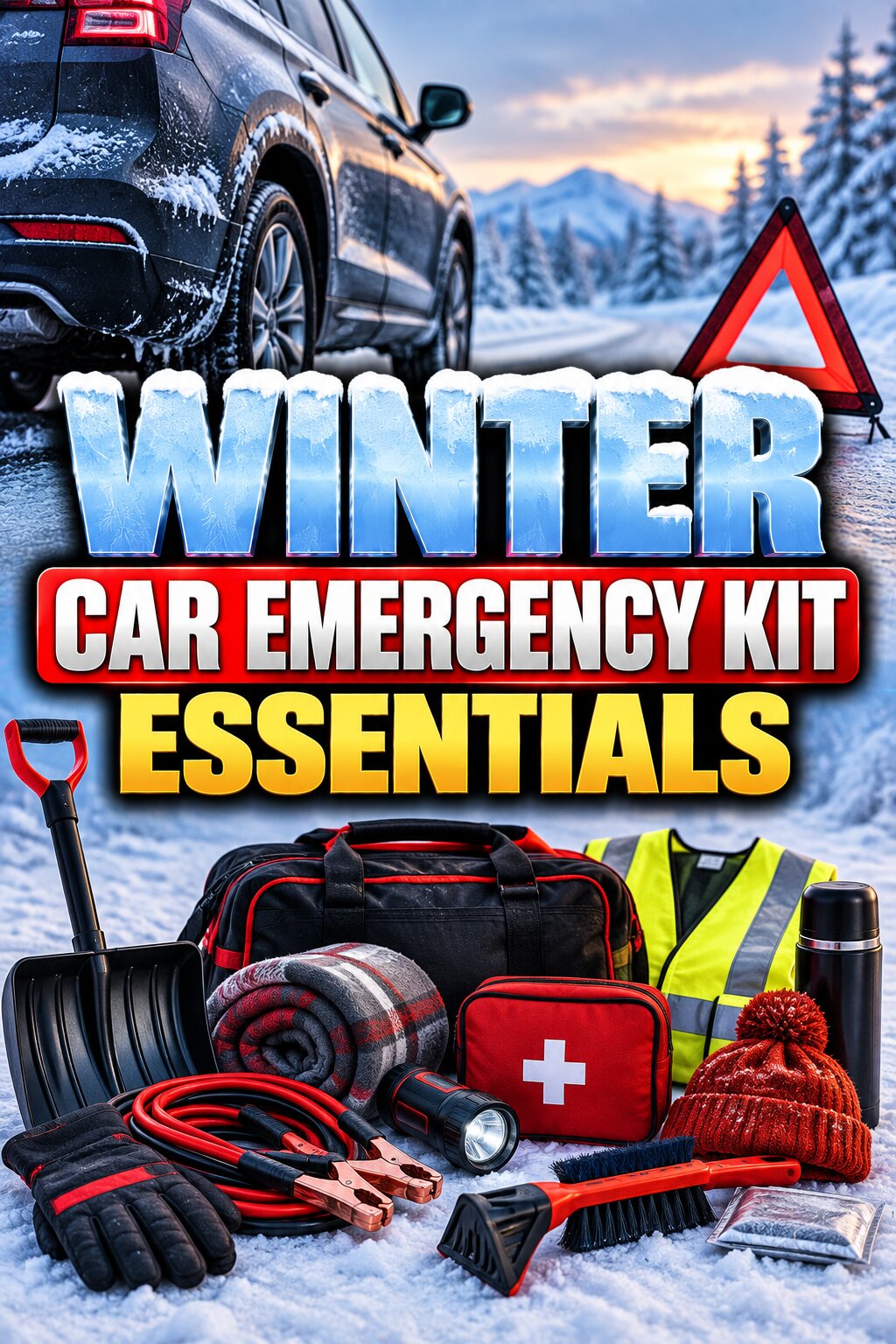
A winter car emergency kit should always include items for visibility, warmth, traction, and basic repairs—think ice scraper, shovel, blankets, jumper cables, and nonperishable food. These essentials can keep you safe if stranded in freezing conditions.
🚗 Core Essentials
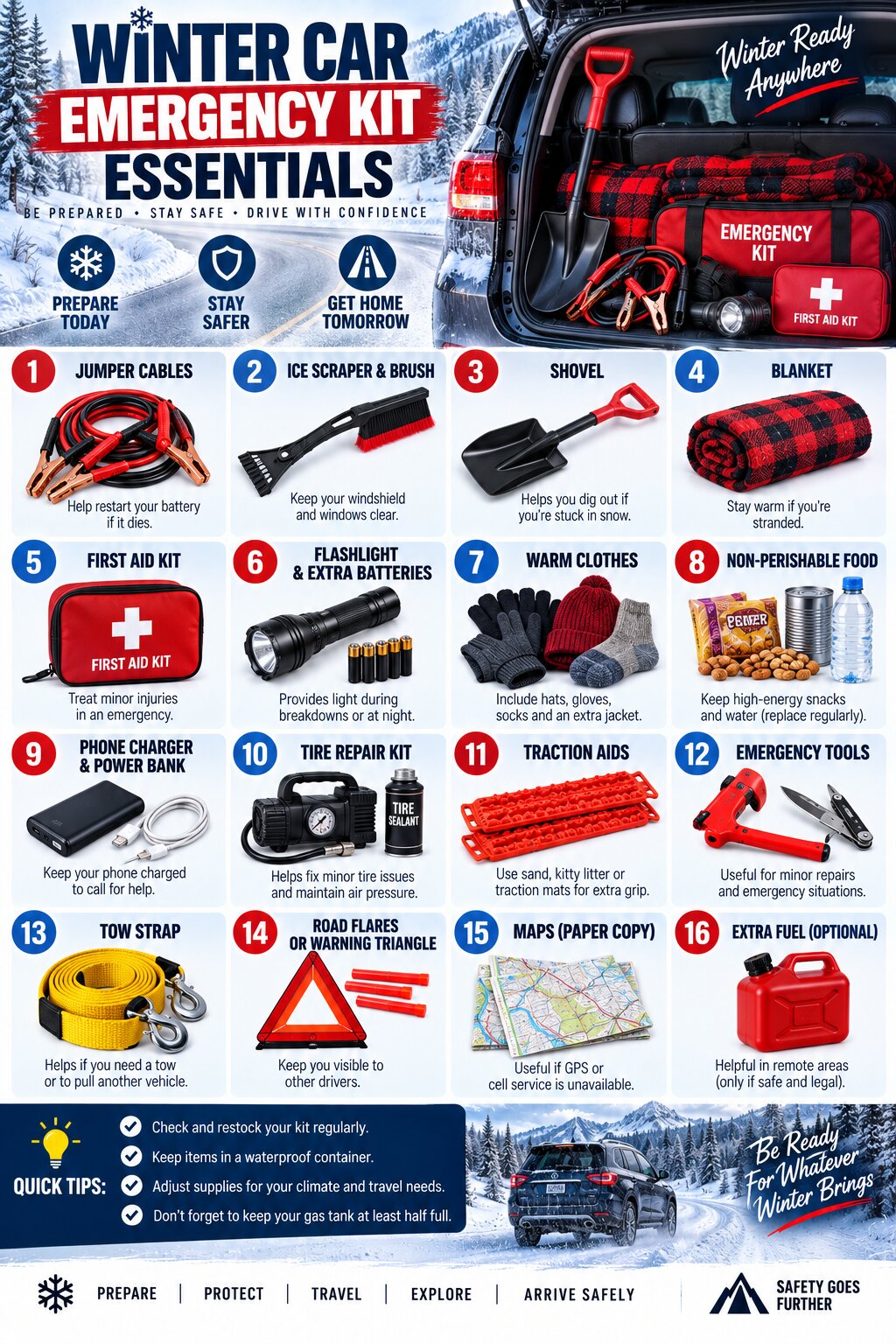
- Ice scraper & snow brush – Clear windshields, windows, and headlights for safe visibility.
- Portable shovel (collapsible) – Dig out tires or clear snow around the exhaust pipe.
- Jumper cables or portable jump starter – Cold weather drains batteries quickly.
- Flashlight with extra batteries – For signaling or inspecting your car in the dark.
- First aid kit – Bandages, antiseptic wipes, gauze, and medical tape.
- Blankets, mittens, socks, hats – Prevent hypothermia while waiting for help.
- Nonperishable food & bottled water – Granola bars, nuts, dried fruit, peanut butter.
- Cell phone charger & power bank – Keep communication lines open.
❄️ Extra Supplies for Harsh Winters
- Sand or non-clumping cat litter – Provides traction under stuck tires.
- Tow strap & tire chains – For pulling out or driving in heavy snow.
- Hand warmers & winter boots – Added comfort for long waits.
- Sleeping bag – Useful for extended roadside emergencies.
- Road flares or reflective triangles – Increase visibility to other drivers.
- Multi-tool (Swiss Army knife/Leatherman) – Versatile for small fixes.
🔧 Other Handy Items
- Small fire extinguisher (Class B/C) – In case of engine or electrical fire.
- Tire gauge, jack, lug wrench – For flat tire emergencies.
- Foam tire sealant – Quick fix for punctures.
- Duct tape & rags – Temporary repairs and cleanup.
- Battery-powered or hand-crank radio – Stay updated on weather alerts.
- Rain poncho – Protection while working outside.
⚠️ Risks & Safety Tips
- Carbon monoxide hazard: Always clear snow from the tailpipe before idling.
- Visibility laws: In many regions, it’s illegal to drive without clearing all snow from your car.
- Battery drain: Cold weather reduces battery capacity by up to 50%. Keep jump starter charged.
- Food storage: Avoid canned items that may burst in freezing temperatures; stick to sealed dry goods.
✅ Quick Checklist
| Category | Must-Have Item |
|---|---|
| Visibility | Ice scraper, snow brush, flares |
| Warmth | Blankets, mittens, hand warmers |
| Traction | Shovel, sand/cat litter, tire chains |
| Power | Jumper cables, power bank |
| Safety | First aid kit, extinguisher |
| Sustenance | Water, nonperishable food |
| Tools | Multi-tool, duct tape, tire kit |
What Is a Winter Car Emergency Kit?
A winter car emergency kit is a collection of supplies and tools designed to help drivers manage unexpected situations during cold weather.
The kit serves several important purposes:
- Keeps occupants warm
- Helps vehicles regain traction
- Provides emergency communication options
- Improves visibility
- Supports basic medical needs
- Supplies food and water during delays
- Assists with simple roadside repairs
Most winter emergencies involve four major problems:
- Loss of heat
- Loss of traction
- Loss of power
- Delayed rescue or roadside assistance
A good emergency kit addresses all four concerns.
Why Every Driver Needs a Winter Emergency Kit
Many people assume emergency kits are only necessary for remote mountain roads. However, winter breakdowns occur in cities, suburbs, and highways every year.
Consider these common situations:
Dead Battery
Cold weather reduces battery performance. A battery that starts your vehicle perfectly in summer may struggle in freezing temperatures.
Snowbank Entrapment
Even experienced drivers can slide off icy roads and become stuck in deep snow.
Road Closures
Winter storms can close roads for hours, leaving drivers stranded unexpectedly.
Mechanical Failure
Frozen fuel lines, tire issues, and engine problems often occur during severe weather.
Traffic Delays
A major accident or snowstorm can trap motorists for extended periods.
Because help may take time to arrive, self-sufficiency becomes extremely important.
Essential Warmth Supplies
Emergency Blankets
Warmth should be your first priority during winter emergencies.
Pack:
- Wool blankets
- Fleece blankets
- Thermal emergency blankets
- Mylar space blankets
Emergency blankets trap body heat and help prevent hypothermia. Multiple safety organizations include them on their recommended emergency-kit checklists.
Extra Winter Clothing
Keep spare clothing in a waterproof bag.
Include:
- Warm socks
- Gloves
- Hats
- Scarves
- Insulated jackets
- Waterproof pants
Wet clothing dramatically increases heat loss. Therefore, dry backup clothing can make a huge difference during a long wait.
Hand and Foot Warmers
Disposable warmers provide additional comfort and can help maintain circulation during extreme cold.
Traction and Recovery Equipment
Snow Shovel
A compact shovel is one of the most valuable winter tools.
You can use it to:
- Dig around tires
- Clear snow from under the vehicle
- Remove packed snow blocking movement
Most winter preparedness experts strongly recommend carrying one.
Sand or Kitty Litter
When tires spin on ice, traction becomes critical.
Spreading:
- Sand
- Non-clumping kitty litter
- Gravel
around drive wheels can provide enough grip to get moving again.
Traction Mats
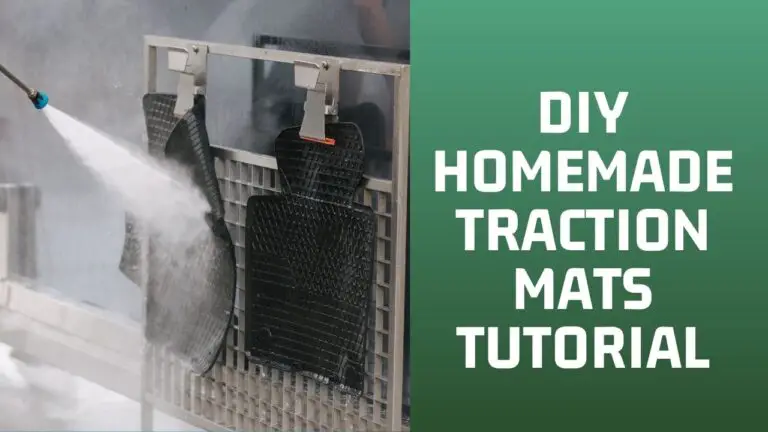
Traction mats create a gripping surface under tires and work especially well in snow-covered parking areas.
Tire Chains
Drivers traveling through mountain regions should consider tire chains where legal and appropriate. They significantly improve traction in deep snow.
Visibility and Signaling Equipment
Flashlight
A high-quality flashlight helps you:
- Inspect your vehicle
- Change tires
- Signal for help
- Navigate safely after dark
Carry extra batteries or choose a rechargeable model.
Headlamp
Unlike a flashlight, a headlamp keeps both hands free while working.
This becomes especially useful during nighttime repairs.
Reflective Warning Triangles
Reflective triangles alert approaching drivers.
Place them behind your vehicle if it becomes disabled on the roadside.
Road Flares
Road flares increase visibility during storms and low-light conditions. However, use them carefully and according to manufacturer instructions.
Reflective Safety Vest
If you must leave the vehicle, a reflective vest makes you far easier for other motorists to see.
Vehicle Recovery and Repair Supplies
Jumper Cables
Dead batteries remain one of the most common winter vehicle problems.
Jumper cables provide a simple solution when another vehicle is available to assist.
Portable Jump Starter
Portable jump starters offer even more convenience because they do not require another vehicle.
Many models also include:
- USB charging ports
- Flashlights
- Emergency strobes
Tire Inflator
Cold temperatures reduce tire pressure. A portable inflator helps maintain proper tire inflation.
Tire Pressure Gauge
Regular tire-pressure checks improve safety and fuel efficiency during winter.
Tow Strap
If another vehicle can safely pull you from snow, a tow strap may prove invaluable.
Basic Tool Kit
Include:
- Screwdrivers
- Adjustable wrench
- Pliers
- Multi-tool
- Duct tape
These items help manage small mechanical issues until professional repairs become available.
Snow and Ice Removal Tools
Ice Scraper
Every winter vehicle should carry an ice scraper.
Driving with partially cleared windows reduces visibility and increases crash risk.
Snow Brush
A snow brush helps remove accumulated snow from:
- Windows
- Roof
- Lights
- Mirrors
Extra Windshield Washer Fluid
Winter washer fluid prevents freezing and improves visibility during storms.
De-Icer Spray
A de-icer can quickly loosen frozen locks and icy windows.
Food and Water Essentials
Bottled Water
Hydration remains important even in cold weather.
Store water carefully and replace it periodically. Emergency preparedness organizations consistently recommend carrying water supplies in winter kits.
Non-Perishable Snacks
Good options include:
- Granola bars
- Trail mix
- Nuts
- Protein bars
- Dried fruit
These foods provide energy during extended delays.
Emergency Food Packs
Drivers who frequently travel long distances may benefit from dedicated emergency food supplies.
Communication and Power Supplies
Phone Charger
A charged phone can be your lifeline during an emergency.
Carry:
- Vehicle charger
- USB cables
- Backup charging cords
Portable Power Bank
A fully charged power bank keeps phones operational if the vehicle battery fails.
Battery-Powered Radio
Weather radios provide important updates when mobile service becomes unreliable.
First Aid and Personal Safety Items
First Aid Kit
Every emergency kit should include:
- Bandages
- Gauze
- Antiseptic wipes
- Medical tape
- Pain relievers
- Gloves
A first-aid kit allows you to address minor injuries immediately.
Prescription Medications
If you depend on medication, keep emergency supplies available whenever possible.
Emergency Contact Information
Store emergency phone numbers both digitally and on paper.
Important Vehicle Fluids and Maintenance Items
Antifreeze
Proper coolant levels help protect your engine from freezing temperatures.
Fuel-Line Antifreeze
In extremely cold regions, fuel-line antifreeze may help prevent freezing-related issues.
Spare Fuses
Electrical failures become easier to address when spare fuses are available.
Items Many Drivers Forget
Several useful items often get overlooked.
Consider adding:
Paper Towels
Helpful for cleaning windows, checking fluids, and handling spills.
Duct Tape
Useful for temporary repairs.
Waterproof Matches
Can assist in survival situations where permitted and used safely.
Road Maps
GPS systems occasionally fail. A physical map provides a reliable backup.
Whistle
A whistle helps attract attention without exhausting your energy.
When to Worry About Being Unprepared
Not every missing item creates immediate danger. However, certain situations should raise concern.
You Frequently Drive Long Distances
Long trips increase exposure to:
- Storms
- Remote roads
- Delayed assistance
A complete emergency kit becomes essential.
You Live in Snowy Regions
Areas with frequent snowstorms create higher risks of becoming stranded.
Your Vehicle Is Older
Older vehicles often face:
- Battery failures
- Tire issues
- Mechanical breakdowns
Additional preparation reduces risk.
You Travel Alone
Solo travelers benefit greatly from extra emergency supplies because assistance may not be immediately available.
You Transport Children or Pets
Families should carry:
- Extra blankets
- Additional food
- Extra water
- Pet supplies
Children and pets can become cold much faster than healthy adults.
What to Do If You Become Stranded
Even the best emergency kit works only when paired with smart decisions.
Stay With Your Vehicle
Your vehicle provides shelter and is easier for rescuers to locate than a person on foot. Safety agencies recommend remaining with your vehicle whenever possible.
Make Your Vehicle Visible
Use:
- Reflective triangles
- Hazard lights
- Reflective markers
to increase visibility.
Conserve Battery Power
Use electronics wisely and avoid unnecessary battery drain.
Avoid Carbon Monoxide Exposure
If running the engine for warmth, ensure the exhaust pipe remains clear of snow. Carbon monoxide can become deadly in enclosed conditions.
Stay Hydrated and Warm
Use blankets, extra clothing, and emergency food while waiting for assistance.
How Often Should You Check Your Emergency Kit?
Review your kit at least twice each year.
Check:
- Expiration dates
- Batteries
- Water supplies
- Medications
- Clothing condition
Regular maintenance ensures everything works when needed.
Final Thoughts
A winter car emergency kit is not just another accessory. It is a practical safety tool that can protect you and your passengers when weather conditions suddenly deteriorate. While nobody expects to become stranded, winter emergencies happen every year. Fortunately, preparation is simple and affordable.
By carrying warmth supplies, traction aids, emergency food, water, communication tools, and recovery equipment, you dramatically improve your ability to handle unexpected situations safely. Most importantly, you gain peace of mind every time you drive during the winter season.
Frequently Asked Questions
What is the most important item in a winter car emergency kit?
Warm blankets are among the most important items because preventing hypothermia is critical during winter emergencies.
How much water should I keep in my vehicle?
Carry enough water for all passengers, and replace stored water regularly.
Are jumper cables enough for winter emergencies?
They help, but a portable jump starter offers additional convenience and independence.
Should I keep food in my car all winter?
Yes. Choose non-perishable snacks such as protein bars, nuts, and dried fruit.
How often should I replace emergency kit supplies?
Inspect the kit every six months and replace expired or damaged items.
Is kitty litter really useful in snow?
Yes. Non-clumping kitty litter can improve traction when tires become stuck on ice or snow.
Do I need a shovel if I live in the city?
Absolutely. Urban drivers can still become trapped by plowed snowbanks or severe storms.
Can I rely only on roadside assistance?
No. Winter storms often delay assistance, making self-sufficiency important.
Should electric vehicle owners carry a winter emergency kit?
Yes. EV drivers should carry the same emergency supplies as drivers of gasoline vehicles.
Where should I store my emergency kit?
The trunk is usually the best location because it keeps supplies organized and accessible.
Helpful Resources
- CDC Winter Weather Safety: CDC Winter Weather Safety Guide
- Consumer Reports Winter Emergency Kit Guide: Consumer Reports Winter Car Emergency Kit Guide
- RAC Winter Driving Discussion & Advice: RAC Winter Breakdown Kit Checklist
- National Safety Council Emergency Car Kit Guide: National Safety Council Emergency Car Kit Essentials