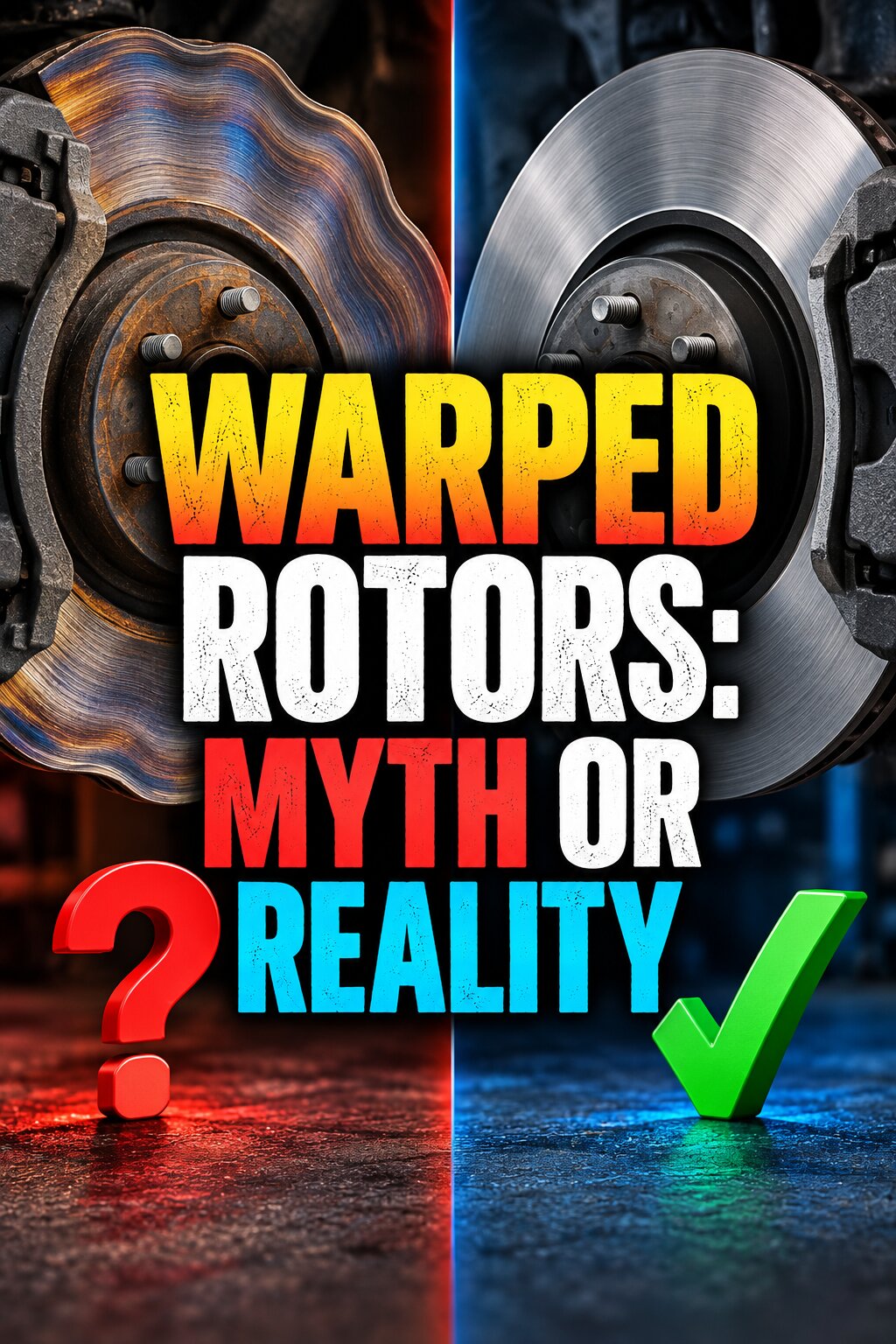
Few automotive topics generate as much debate as warped brake rotors. For decades, drivers and even some mechanics have blamed brake pedal pulsation, steering wheel shake, and brake vibration on “warped rotors.”
But are rotors actually warping?
The answer is both yes and no.
True rotor warping can occur under extreme conditions, but most brake vibrations blamed on warped rotors are actually caused by disc thickness variation (DTV), uneven brake pad deposits, rotor runout, or mounting issues rather than a physically bent brake rotor. Many brake engineers, manufacturers, and technical service bulletins now consider rotor warping to be relatively uncommon in normal street vehicles.
This article explores the science behind brake rotor vibration, why the “warped rotor” diagnosis became so common, and what is really happening when your vehicle shakes during braking.
What Are Brake Rotors?
Brake rotors are large metal discs attached to the wheel hubs.
When you press the brake pedal:
- Hydraulic pressure activates the brake calipers.
- Brake pads clamp onto the rotor.
- Friction converts motion into heat.
- The vehicle slows down.
Because rotors absorb tremendous heat and pressure, many people assume they can easily bend or warp.
However, modern rotors are engineered to withstand extremely high temperatures. Most are made from cast iron, chosen specifically for its thermal stability and durability.
Why People Think Rotors Warp
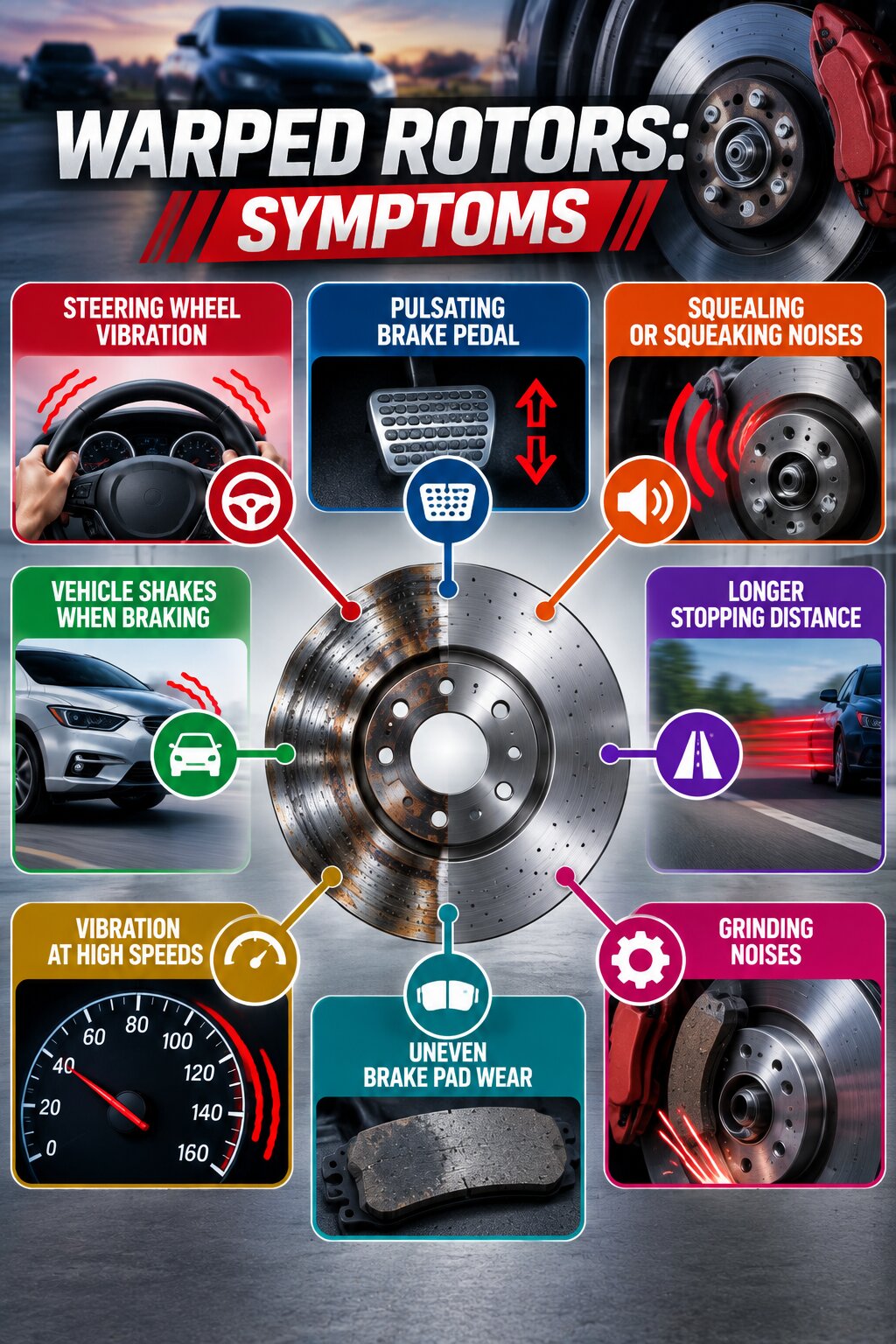
The classic symptoms include:
- Pulsating brake pedal
- Steering wheel shake
- Vehicle vibration during braking
- Brake judder
- Uneven braking feel
For years, these symptoms were automatically diagnosed as warped rotors.
The logic seemed straightforward:
- Brakes get hot.
- Heat bends metal.
- Bent metal causes vibration.
Unfortunately, reality is more complicated.
Brake engineers have found that most vehicles experiencing brake vibration do not actually have rotors that are physically bent. Instead, they usually have thickness variations or uneven friction material deposits on the rotor surface. (IPD USA)
The Myth: Rotors Commonly Warp From Heat
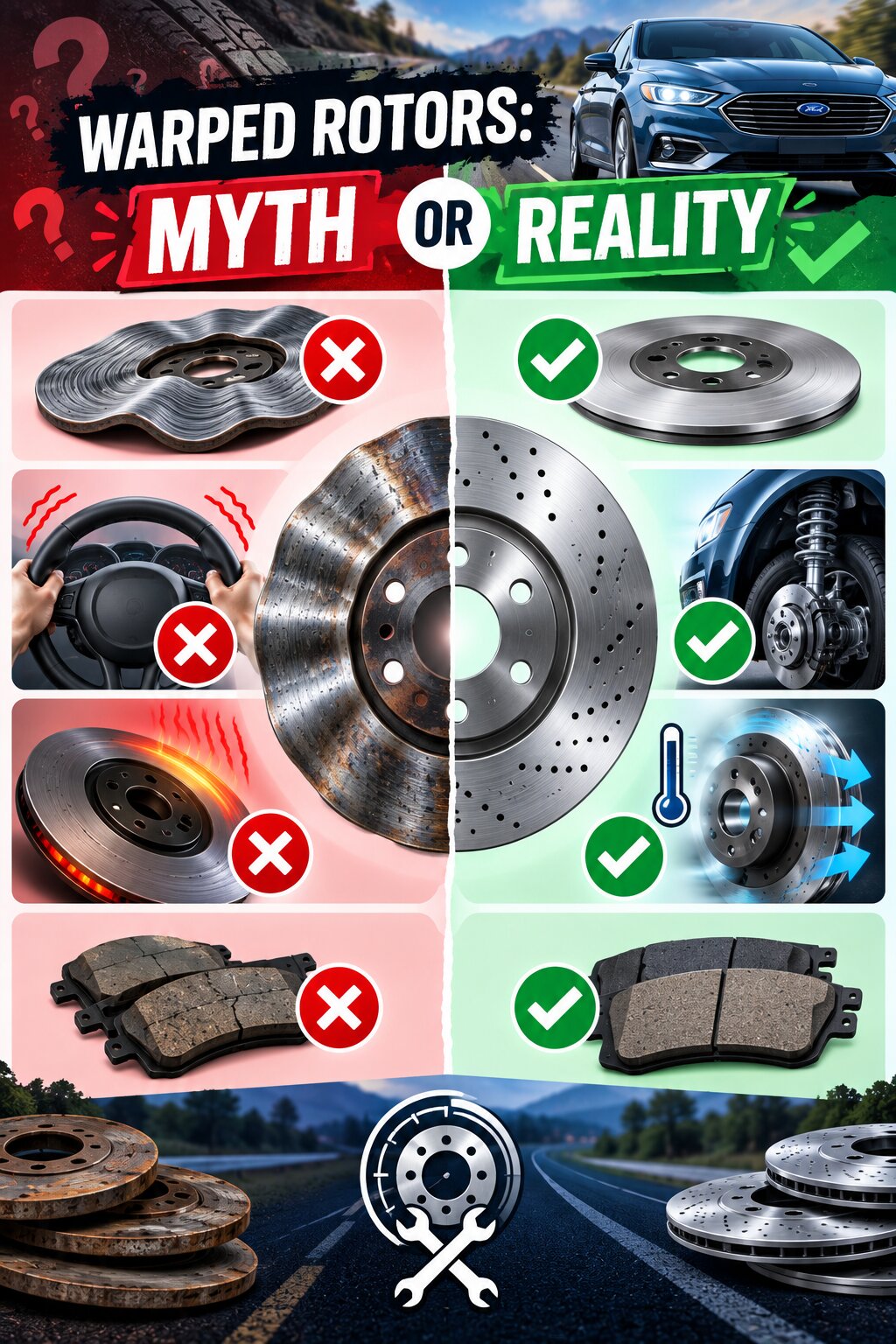
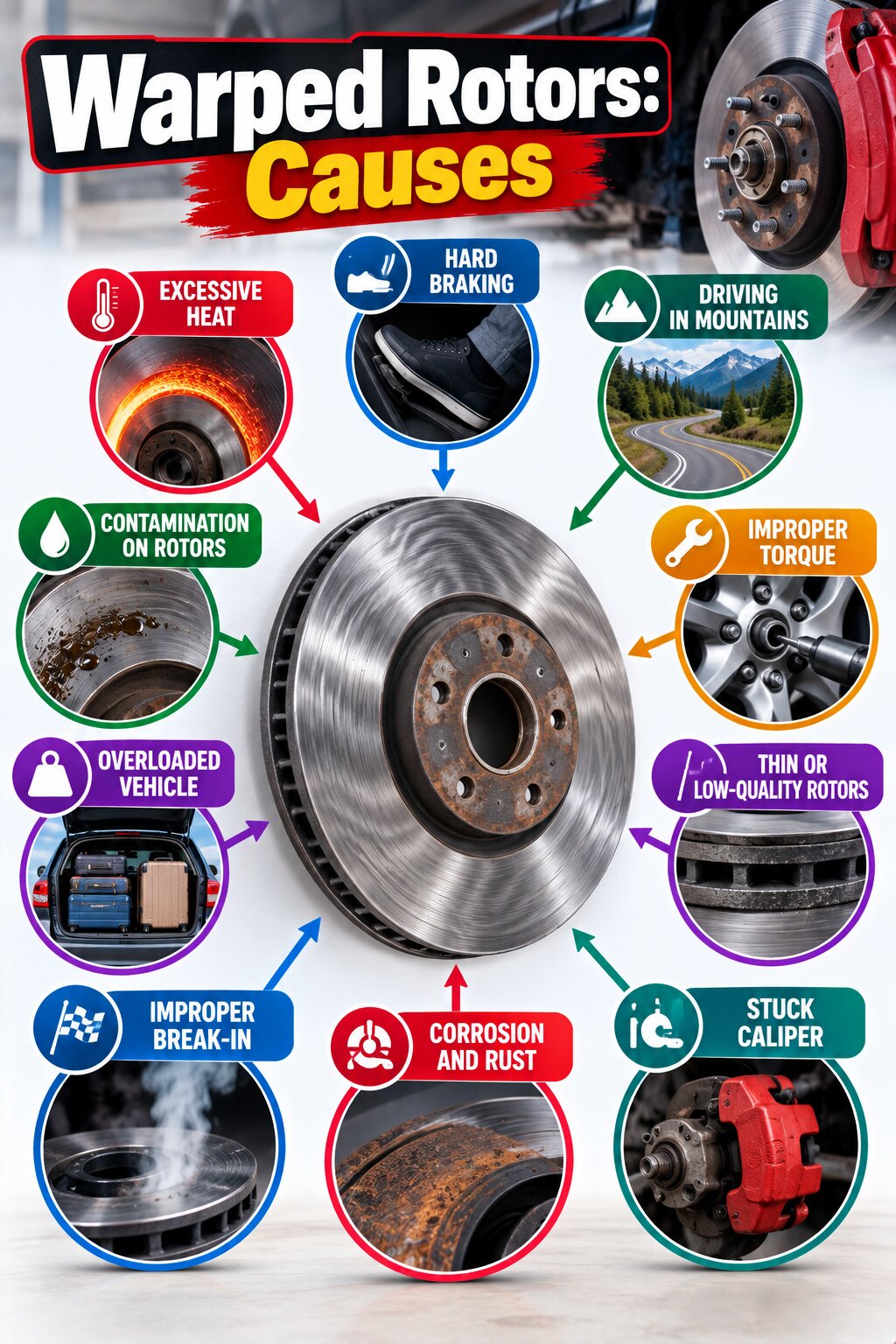
The traditional explanation claims that hard braking generates enough heat to distort the rotor into a wavy or warped shape.
Many drivers imagine a rotor becoming similar to a bent record or warped frying pan.
While this can theoretically happen, experts generally agree it is uncommon in normal passenger vehicles. Modern cast-iron rotors can tolerate temperatures far higher than what most street driving generates. (Engineer Fix)
In fact, several brake engineering studies and technical papers suggest that true thermal warping is relatively rare outside severe-duty applications such as:
- Road racing
- Track days
- Extreme towing
- Heavy commercial use
- Repeated overheating events
The Reality: Disc Thickness Variation (DTV)
The most common cause of brake pulsation is called Disc Thickness Variation (DTV).
DTV means that the rotor is slightly thicker in some areas than others.
The differences are often microscopic.
As the rotor spins through the brake pads:
- Thick sections push the pads outward.
- Thin sections allow the pads to move inward.
- Hydraulic pressure fluctuates.
- The driver feels a pulse through the brake pedal.
This creates the sensation commonly described as a warped rotor even though the rotor may remain structurally straight. (Car Dogs)
How Small Thickness Changes Cause Big Vibrations
Many drivers are surprised by how little variation is required.
Brake systems are extremely sensitive.
Even minute differences in rotor thickness can create:
- Pedal pulsation
- Steering wheel vibration
- Brake shudder
- Cabin vibration
Several manufacturers note that variations measured in microns can be enough to create noticeable brake judder.
Uneven Brake Pad Deposits
One of the biggest contributors to DTV is uneven brake pad material transfer.
Modern brake pads intentionally transfer a thin layer of friction material onto the rotor.
This is part of normal brake operation.
Problems occur when:
- Rotors become excessively hot.
- The vehicle comes to a complete stop.
- The driver continues holding the brake pedal.
The hot brake pads can leave uneven deposits on the rotor surface.
Over time these deposits build up and create thickness variation that causes vibration during braking.
Rotor Runout
Rotor runout is another major cause of brake vibration.
Runout occurs when the rotor does not rotate perfectly true.
Instead, it wobbles slightly as it spins.
This wobble can cause:
- Uneven pad contact
- Uneven wear
- Pad material buildup
- Disc thickness variation
Eventually the driver experiences symptoms that are commonly blamed on warped rotors.
Causes of Rotor Runout
Common causes include:
Rust on the Hub
Corrosion between the rotor and wheel hub can prevent proper mounting.
Dirt and Debris
Even small particles trapped behind the rotor can create runout.
Improper Installation
Improper mounting procedures can create alignment problems.
Manufacturing Variations
Occasionally new rotors may have slight imperfections.
Uneven Lug Nut Torque
Improper wheel installation can contribute to rotor problems.
When lug nuts are:
- Over-tightened
- Unevenly tightened
- Installed incorrectly
They can create stress that contributes to rotor runout and brake vibration.
This is one reason professional shops use torque wrenches rather than impact guns for final tightening.
Can Rotors Actually Warp?
Yes.
True rotor warping is possible.
However, it usually requires conditions far beyond normal driving.
Examples include:
Severe Track Use
Repeated high-speed braking generates enormous heat.
Heavy Commercial Applications
Large trucks can place exceptional loads on brake systems.
Extreme Overheating
Improper braking techniques can create excessive temperatures.
Manufacturing Defects
Rare material defects can contribute to distortion.
Even then, actual metal deformation is less common than many people believe. (Engineer Fix)
Symptoms Often Blamed on Warped Rotors
Drivers commonly report:
Brake Pedal Pulsation
The brake pedal moves up and down during braking.
Steering Wheel Shake
Vibration occurs primarily when slowing down.
Brake Judder
A shaking sensation travels through the vehicle.
Vehicle Shudder
The entire vehicle vibrates during braking.
These symptoms can result from DTV, runout, pad deposits, or actual rotor distortion.
Why Vibration Occurs Only During Braking
A key clue is timing.
If the vibration occurs:
- Only while braking
- Disappears when brakes are released
The issue is often rotor-related.
If vibration continues all the time, other components may be involved, such as:
- Tires
- Wheel bearings
- Suspension parts
- Driveshafts
Common Driver Habits That Contribute to Brake Judder
Riding the Brakes
Continuous braking creates excessive heat.
Aggressive Driving
Repeated hard stops increase rotor temperatures.
Holding the Brake After Hard Stops
This can create localized pad deposits.
Improper Brake Bedding
New pads and rotors require proper break-in procedures.
Improper bedding can encourage uneven material transfer.
How Mechanics Diagnose Rotor Problems
Professional technicians use specialized tools.
Dial Indicator
Measures rotor runout.
Micrometer
Measures rotor thickness.
Visual Inspection
Checks for:
- Hot spots
- Cracks
- Surface deposits
- Uneven wear
These tests help distinguish true warping from DTV or mounting issues. (DBC Brakes Blog)
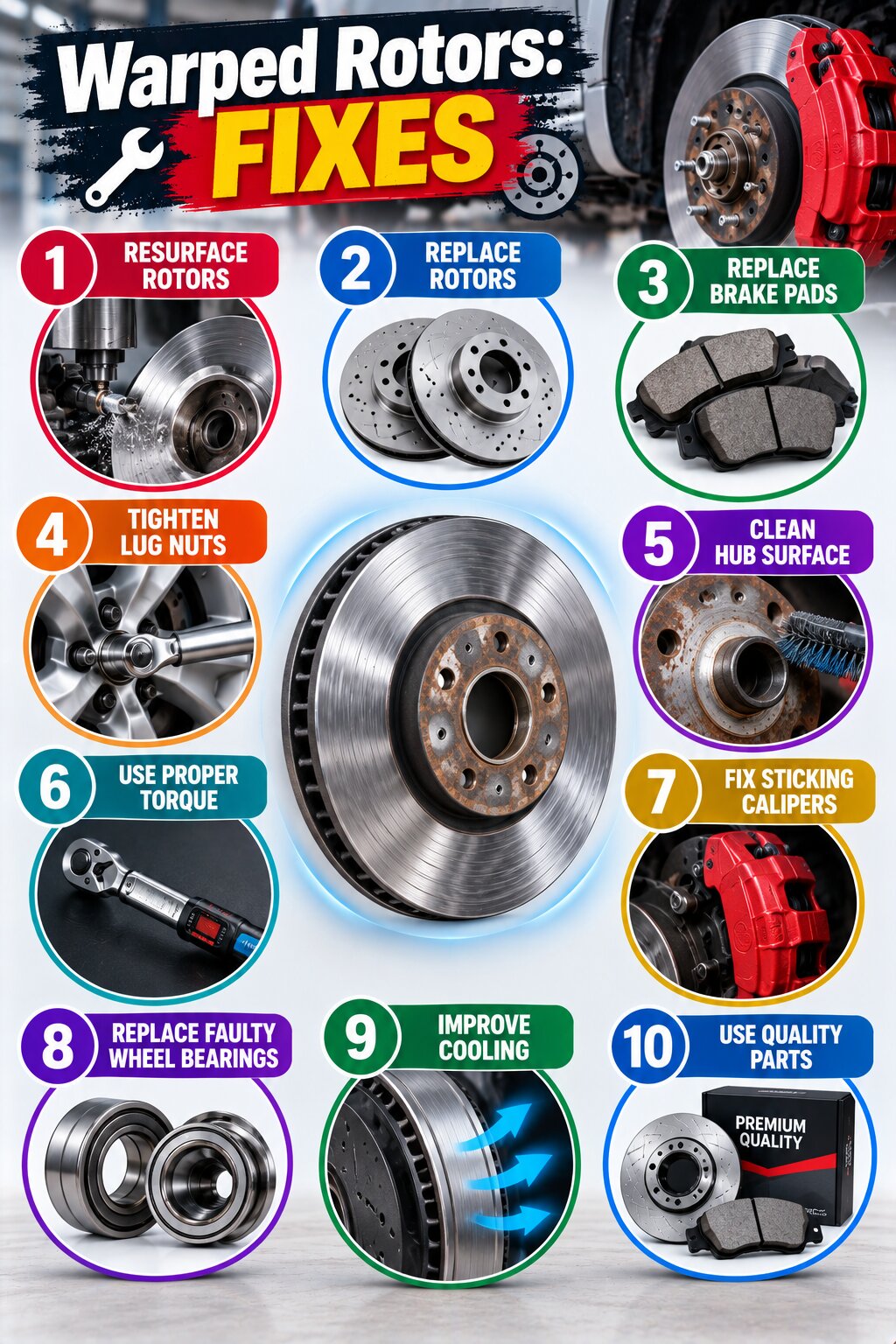
Can Warped Rotors Be Resurfaced?
Sometimes.
If sufficient rotor thickness remains:
- Resurfacing may remove deposits.
- Runout may be corrected.
- DTV may be eliminated.
Several manufacturer service bulletins note that brake judder can often be corrected by machining the rotor and refinishing the pads rather than replacing everything.
When Rotors Should Be Replaced
Replacement is usually recommended when:
- Rotor thickness is below specification
- Cracks are present
- Severe heat damage exists
- Excessive runout cannot be corrected
- Repeated resurfacing has occurred
Safety should always take priority over cost savings.
How to Prevent Brake Rotor Problems
Torque Lug Nuts Properly
Always follow manufacturer specifications.
Clean Hub Surfaces
Remove rust and debris before rotor installation.
Bed New Pads Correctly
Follow manufacturer break-in procedures.
Avoid Holding the Brake After Extreme Stops
Allow brakes to cool when practical.
Inspect Brakes Regularly
Early detection helps prevent larger problems.
Myth vs Reality
| Statement | Myth or Reality |
|---|---|
| Brake vibration is always caused by warped rotors | Myth |
| Disc thickness variation commonly causes brake pulsation | Reality |
| Uneven pad deposits can create brake judder | Reality |
| Rotors can physically warp under extreme conditions | Reality |
| Most street vehicles suffer true rotor warping | Myth |
| Rusty hubs can contribute to brake vibration | Reality |
| Improper lug nut torque can cause brake issues | Reality |
| Brake judder always requires new rotors | Myth |
Frequently Asked Questions
Are warped rotors real?
Yes, but true rotor warping is relatively uncommon in normal passenger vehicles. Most brake pulsation problems are caused by disc thickness variation, pad deposits, or runout rather than actual rotor deformation.
Why does my steering wheel shake when braking?
The most common causes include rotor thickness variation, uneven pad deposits, and rotor runout.
Can new rotors warp?
True warping is rare. However, improper installation, hub contamination, or uneven pad deposits can create symptoms similar to warped rotors.
What causes brake pedal pulsation?
Brake pedal pulsation is most commonly caused by disc thickness variation that changes hydraulic pressure as the rotor rotates.
Should I replace or resurface my rotors?
If the rotor remains above minimum thickness and has no severe damage, resurfacing may be possible. Otherwise, replacement is often recommended.
Can improper lug nut torque cause rotor problems?
Yes. Uneven or excessive lug nut torque can contribute to runout and brake vibration.
Final Thoughts
The debate over warped rotors is one of the most persistent myths in automotive repair. While brake rotors can physically warp under extreme conditions, the vast majority of brake vibrations experienced by everyday drivers are caused by disc thickness variation, uneven brake pad deposits, rotor runout, hub contamination, or improper installation practices.
Modern brake engineering has shown that what many drivers call “warped rotors” is usually a different problem entirely. Understanding the real causes of brake judder not only leads to more accurate repairs but can also save money by preventing unnecessary rotor replacement. Proper installation, correct lug nut torque, regular maintenance, and proper brake bedding remain the best defenses against future brake vibration problems.