Have you ever visited a dealership website, requested a quote, checked trade-in values, or test-driven a vehicle, only to receive a flood of phone calls, text messages, emails, and voicemails afterward?
Many car shoppers are surprised by the persistence. Some receive multiple calls per day. Others continue hearing from dealerships weeks or even months after their initial inquiry. It often leaves buyers wondering:
- Why do car dealers keep calling me?
- How did they get my information?
- Why won’t they stop?
- Are they trying to pressure me into buying a car?
- Is this normal?
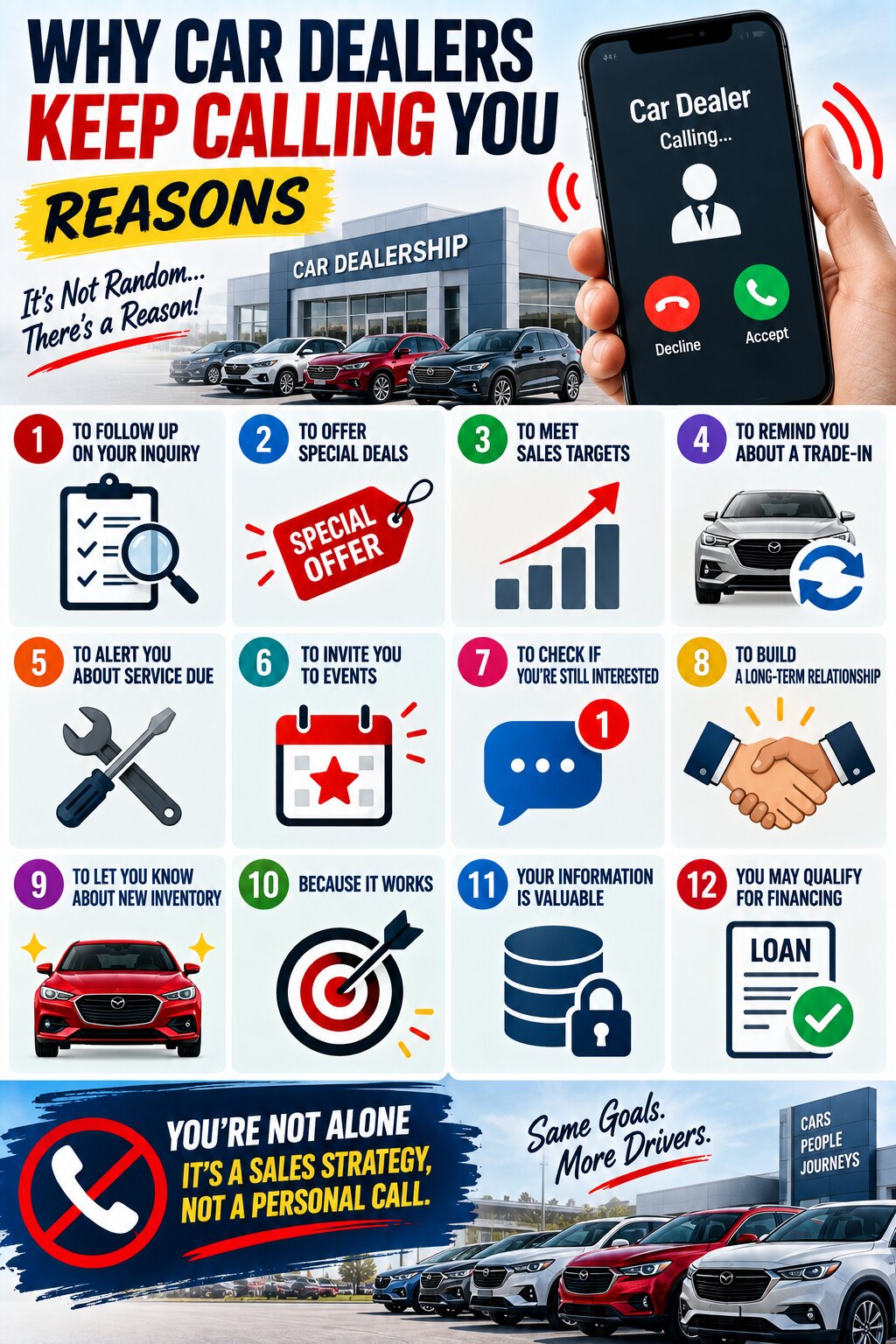
The short answer is yes—it’s normal. Most dealership calls are not random. They are part of a structured sales process designed to follow up with potential buyers and prevent sales opportunities from slipping away. Dealerships invest significant money in advertising, lead generation, customer relationship management (CRM) systems, and sales staff. Once a customer shows interest, dealerships typically consider that person a potential buyer until they either purchase a vehicle or clearly indicate they are no longer shopping.
This guide explains Why Car Dealers Keep Calling You, how your information enters their systems, what motivates their follow-up efforts, and how to reduce unwanted contact without damaging relationships if you may still buy a vehicle later.
Why Dealerships Are So Persistent
From a customer’s perspective, repeated calls can feel annoying.
From a dealership’s perspective, they are simply following up on a lead.
The automotive industry operates on a highly competitive sales model. Every inquiry represents potential revenue. Whether you filled out a form online, requested pricing information, or visited a showroom, dealerships often assume you’re actively shopping for a vehicle.
Sales teams know that many shoppers contact multiple dealerships simultaneously. If one dealership waits several days to follow up, another dealership may win the sale first.
As a result, dealerships emphasize:
- Rapid response times
- Multiple follow-up attempts
- Calls, texts, and emails
- Scheduled follow-up campaigns
- Long-term customer nurturing
Industry sources consistently highlight response speed as one of the biggest factors influencing whether a dealership successfully converts an inquiry into a sale.
How Dealers Get Your Contact Information
Many consumers believe dealerships somehow obtain their information without permission.
In reality, customers usually provide it themselves.
Common sources include:
Vehicle Inquiry Forms
When you request:
- Price quotes
- Payment estimates
- Vehicle availability
- Special offers
the dealership typically requires:
- Name
- Email address
- Phone number
That information immediately enters the dealership’s CRM system.
Trade-In Valuation Tools
Many dealership websites offer instant trade-in value calculators.
Before displaying results, they often ask for:
- Contact information
- Vehicle details
- Email address
- Phone number
Once submitted, the dealership may begin contacting you.
Test Drives
Scheduling a test drive frequently requires:
- Driver’s license information
- Phone number
- Email address
Dealerships use this information to follow up after your visit.
Credit Applications
Financing applications generate some of the highest-priority leads.
Submitting a credit application usually signals serious buying intent.
As a result, dealerships often begin contacting applicants almost immediately.
Service Visits
Even if you’re not shopping for a vehicle, dealerships may already have your information because you’ve:
- Purchased a vehicle there
- Serviced your vehicle there
- Scheduled maintenance
- Participated in recalls
Your customer profile remains in the dealership database.
The Role of CRM Systems
Modern dealerships rarely manage leads manually.
Most use Customer Relationship Management (CRM) software.
A CRM tracks:
- Customer information
- Vehicle interests
- Previous purchases
- Service history
- Follow-up schedules
- Communication records
When you become a lead, the CRM often automatically generates reminders for salespeople to contact you.
For example:
Day 1
- Call customer
- Send email
Day 2
- Send text message
Day 4
- Call again
Day 7
- Follow-up email
Day 14
- Check-in call
The salesperson may not even be personally deciding to contact you every time. The CRM is often assigning follow-up tasks automatically.
Why Salespeople Call So Much
Most dealership salespeople earn income primarily through commissions.
If they don’t sell vehicles, they generally don’t earn much money.
Because of this, they are highly motivated to follow up on every potential opportunity.
From the salesperson’s perspective:
- You requested information.
- You showed interest.
- You might still buy.
They often cannot tell whether:
- You lost interest.
- You purchased elsewhere.
- You’re still comparing options.
- You’re waiting for better incentives.
Without a response, many salespeople assume continued follow-up remains worthwhile.
Why Ignoring Calls Often Doesn’t Work
Many shoppers believe ignoring dealership calls will eventually make them stop.
Ironically, the opposite often happens.
When a salesperson receives no response, they may assume:
- You are busy.
- You missed the call.
- You still intend to buy.
- You prefer another communication method.
As a result, they continue attempting contact.
Some dealerships follow aggressive follow-up schedules because sales managers track:
- Call attempts
- Customer contacts
- Appointment rates
- Lead conversion rates
The salesperson may be evaluated partly on their persistence.
Why Dealers Call Even Months Later
Many buyers are surprised when a dealership calls months after an inquiry.
This occurs because dealerships often categorize leads into long-term follow-up campaigns.
Your information may remain in their system indefinitely.
Reasons for later calls include:
End-of-Month Sales Targets
Dealerships frequently increase outreach efforts when approaching:
- Monthly sales goals
- Quarterly goals
- Annual targets
New Incentives
Dealers may contact previous shoppers about:
- Manufacturer rebates
- Special financing
- Lease deals
- Discount programs
Trade-In Opportunities
If vehicle values rise, dealerships may contact previous customers regarding trade-in opportunities.
Lease Expiration
Customers approaching lease maturity often receive multiple calls encouraging upgrades.
Why Multiple People From the Same Dealership Call
Sometimes customers receive calls from:
- Salespeople
- Internet sales departments
- Business development centers
- Managers
- Finance departments
This can create the impression that the dealership is disorganized.
In reality, multiple departments may be working from the same lead database. Each team has different responsibilities and performance metrics.
Why Dealers Text and Email Too
Today’s dealerships rarely rely solely on phone calls.
Many buyers prefer:
- Text messages
- Emails
- Chat
- Messaging apps
As communication preferences evolve, dealerships increasingly use multiple channels simultaneously.
You might receive:
- Phone calls
- Text messages
- Promotional emails
- Service reminders
- Trade-in offers
all within the same week.
Why Speed Matters So Much to Dealers
Automotive sales are extremely competitive.
When a customer submits an online inquiry, they often contact several dealerships at once.
Dealers know the first meaningful response frequently gains a significant advantage.
For this reason, many dealerships aim to respond:
- Within minutes
- During evenings
- On weekends
- Outside normal business hours
The objective is simple: start a conversation before competitors do.
Why Service Departments Also Call
Not all dealership calls are sales-related.
Service departments routinely contact customers regarding:
- Maintenance reminders
- Oil changes
- Tire rotations
- Recall repairs
- Warranty work
- Customer satisfaction surveys
These calls support retention efforts and encourage customers to continue servicing vehicles at the dealership.
Are Dealership Calls a Scam?
In most cases, no.
Legitimate dealerships call because:
- You submitted information
- You’re in their customer database
- You recently visited
- Your vehicle requires service
However, scammers occasionally impersonate dealerships.
Be cautious if callers request:
- Banking information
- Social Security numbers
- Immediate payments
- Gift cards
- Wire transfers
Always verify suspicious requests directly with the dealership.
How to Reduce Unwanted Dealer Calls
Be Direct
The simplest solution is often the most effective.
Tell the salesperson:
“I’m not currently shopping. Please remove me from follow-up calls.”
Most reputable dealerships will honor the request.
Use Email Instead
Some shoppers prefer email communication.
Request:
- Email-only contact
- Text-only updates
- No phone calls
Many dealerships can accommodate these preferences.
Don’t Submit Forms Casually
Before entering your information:
- Read the form carefully
- Understand what you’re requesting
- Expect follow-up contact
Many shoppers unintentionally generate leads by completing forms out of curiosity.
Use a Dedicated Shopping Email
Some experts recommend creating a separate email address specifically for vehicle shopping. This keeps dealership communications separate from personal messages.
Respond Once
Ironically, a short response often reduces future contact more effectively than ignoring calls altogether.
A brief message such as:
“Thank you. I’ve purchased elsewhere.”
often closes the lead quickly.
Benefits of Dealer Follow-Up
While many shoppers find repeated calls frustrating, follow-up can occasionally benefit consumers.
Examples include:
- Notification of rebates
- Vehicle availability updates
- Trade-in opportunities
- Price reductions
- Financing incentives
- Service promotions
Some buyers ultimately purchase from dealerships that remained in contact throughout the shopping process.
Frequently Asked Questions
Why does a dealership keep calling after I already bought a car?
The dealership may not know you’ve purchased elsewhere. Informing them often ends the follow-up process.
How did a dealership get my phone number?
Usually through online forms, service visits, trade-in tools, financing applications, or previous purchases.
Can dealerships legally keep calling me?
In many cases, yes, especially if you voluntarily provided your contact information and consented to communications.
Why do several people from the same dealership contact me?
Different departments may be assigned to follow up on the same lead.
Will ignoring dealership calls make them stop?
Often no. Many dealerships interpret silence as continued interest rather than rejection.
How do I stop dealership calls permanently?
Contact the dealership directly and request removal from marketing and follow-up communications. Most reputable dealerships will comply.
Conclusion
Car dealerships keep calling because every inquiry represents a potential sale. Once you submit a form, request pricing, schedule a test drive, apply for financing, or even visit a showroom, your information typically enters a dealership CRM system designed to generate follow-up activities. Salespeople are motivated by commissions, managers track lead conversion metrics, and dealerships compete aggressively for customers.
What feels like persistence—or even annoyance—to shoppers often reflects standard dealership sales processes. Understanding how these systems work can help you manage communications more effectively, reduce unwanted contact, and make more informed decisions during your next vehicle purchase.
Reference Links
- https://www.motortrend.com/features/why-car-dealers-keep-calling-how-to-stop-it/
- https://www.aarp.org/auto/car-buying/car-dealership-callbacks/
- https://www.dealer-os.io/blog/car-dealership-lead-follow-up
- https://www.tecobi.com/blog/dealers-stop-chasing-calls-start-winning-conversations-car-should-phone/
- https://www.useclearline.com/blog/automated-lead-followup-dealership