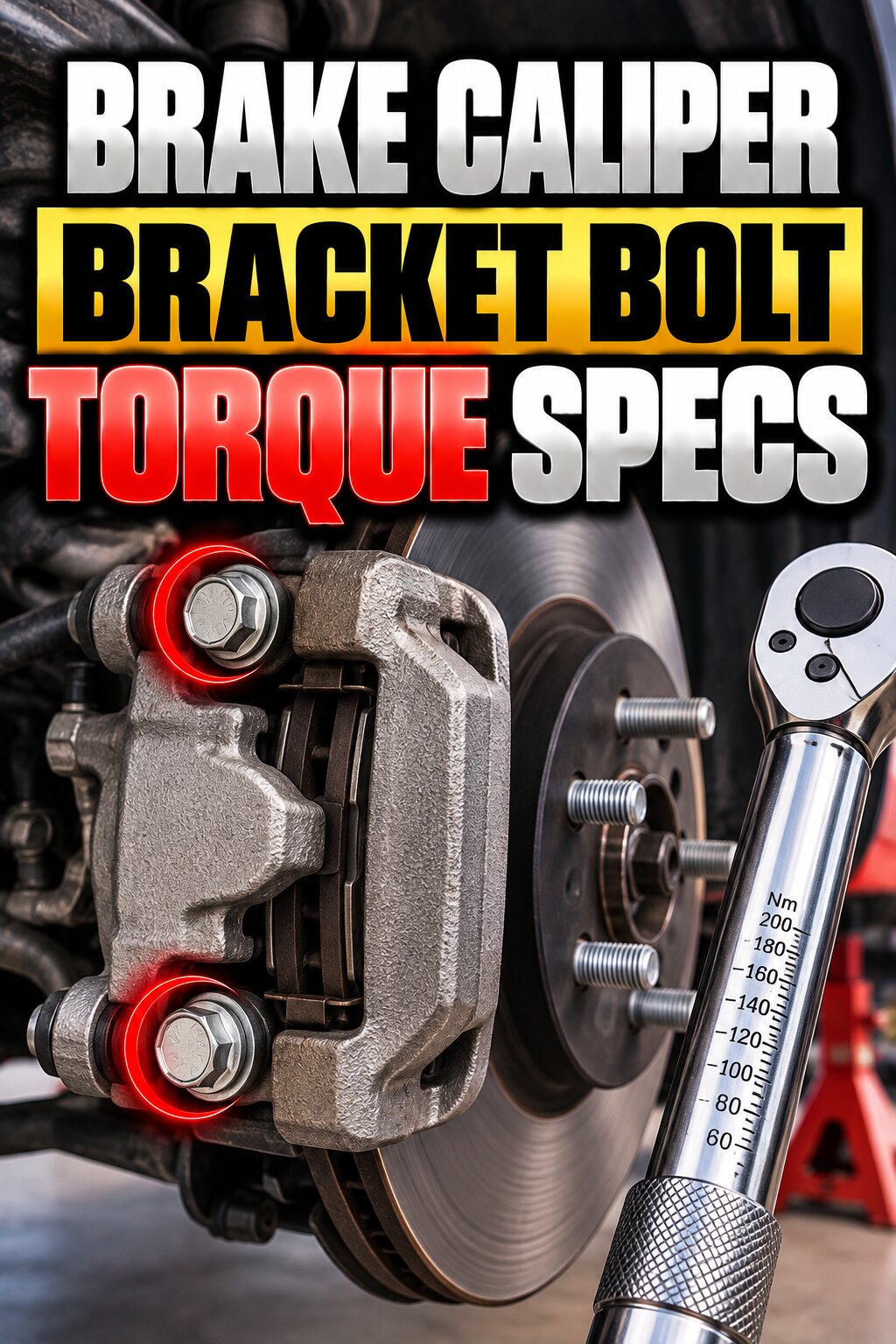
Brake caliper bracket bolts are among the most critical fasteners on any vehicle. These bolts secure the caliper mounting bracket to the steering knuckle or axle housing and ensure the brake assembly remains firmly attached during braking. Every time you press the brake pedal, tremendous forces are transferred through the brake pads, caliper, bracket, and rotor. If the bracket bolts are under-torqued, they may loosen over time. If they are over-torqued, the threads can stretch, weaken, or fail.
Because brake systems are safety-critical, manufacturers specify exact torque values for caliper bracket bolts. Unfortunately, many DIY mechanics assume all brake bracket bolts use the same torque specification. In reality, torque requirements vary significantly depending on vehicle size, brake design, bolt diameter, and manufacturer recommendations.
This guide explains brake caliper bracket bolt torque specifications, why proper torque matters, common torque ranges by vehicle type, installation procedures, torque-angle methods, and model-specific examples.
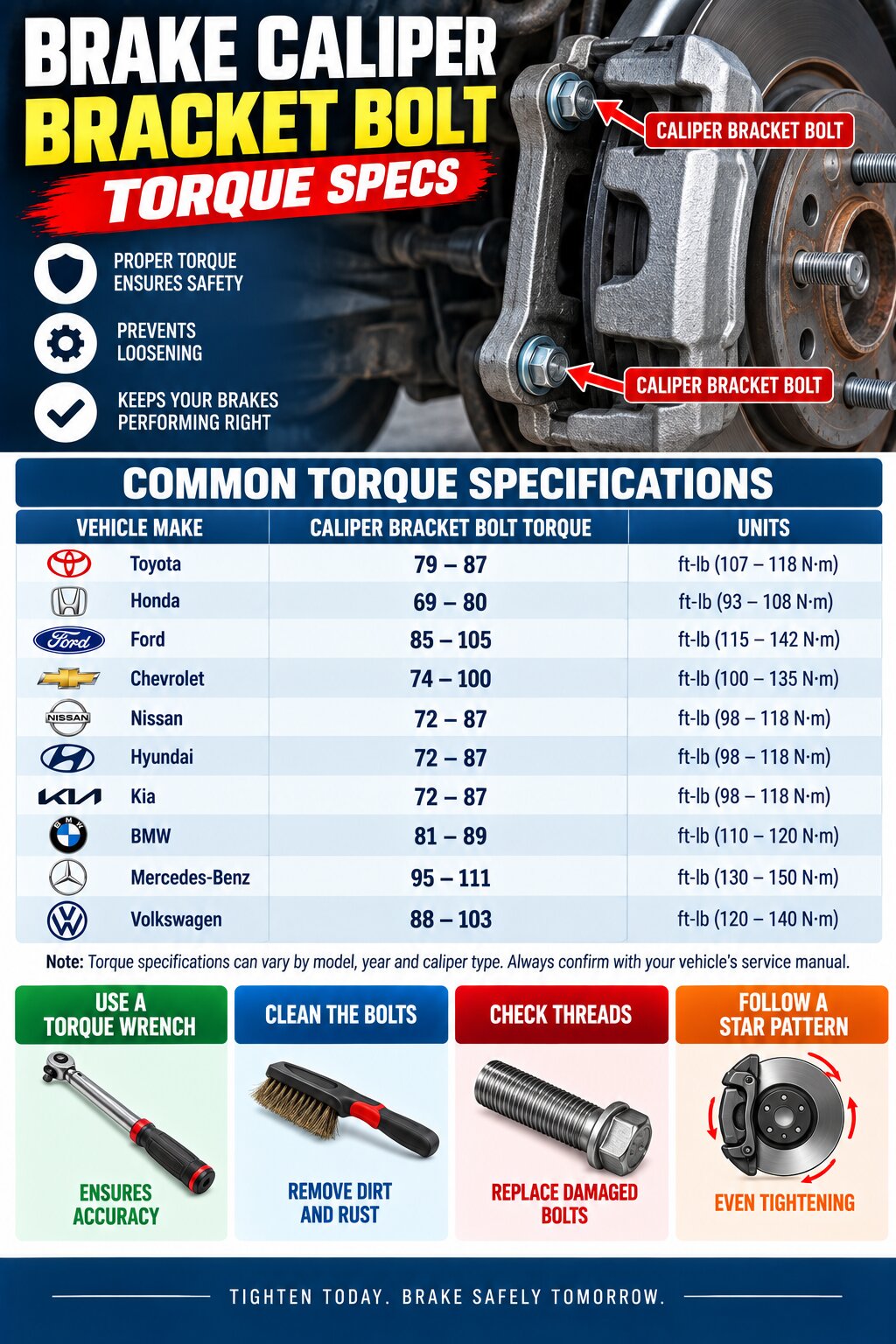
Brake caliper bracket bolt torque specs vary depending on the vehicle make, model, and year. Below is a general reference guide for common passenger vehicles and light trucks. Always confirm with the manufacturer’s service manual for exact specs.
Brake Caliper Bracket Bolt Torque Specs (General Reference)
- Honda Civic / Accord (2000s–2020s): 79–86 ft‑lbs
- Toyota Camry / Corolla: 79 ft‑lbs
- Chevrolet Silverado 1500: 129 ft‑lbs (front), 74 ft‑lbs (rear)
- Ford F‑150: 111 ft‑lbs (front), 85 ft‑lbs (rear)
- Jeep Wrangler: 100 ft‑lbs
- Nissan Altima: 79 ft‑lbs
- Hyundai Sonata / Elantra:
What Is a Brake Caliper Bracket Bolt?
Most modern disc brake systems contain:
- Brake rotor
- Brake pads
- Brake caliper
- Caliper bracket
- Mounting bolts
The caliper bracket serves as the structural mount for the brake caliper.
Bracket bolts secure the bracket to:
- Steering knuckle (front brakes)
- Rear knuckle
- Rear axle housing
Without properly tightened bracket bolts, braking performance and safety can be compromised.
Why Torque Specifications Matter
Brake systems experience enormous loads.
During hard braking:
- Rotors generate substantial stopping force.
- Brake pads clamp tightly against the rotor.
- Forces transfer through the caliper bracket.
Improper torque can create several problems.
Under-Torqued Bolts
If bracket bolts are too loose, you may experience:
- Brake noise
- Clunking sounds
- Caliper movement
- Rotor damage
- Brake vibration
- Bolt loosening
In extreme cases, the bracket can detach.
Over-Torqued Bolts
Over-tightening can cause:
- Thread damage
- Bolt stretching
- Fastener failure
- Difficulty during future repairs
- Steering knuckle damage
This is particularly common when using impact guns without a torque wrench.
Understanding Torque
Torque is a rotational force applied to a fastener.
The relationship between force, distance, and rotational leverage can be visualized here:
Torque is typically measured in:
- Foot-pounds (ft-lb)
- Newton-meters (Nm)
- Inch-pounds (in-lb)
Most North American service manuals use foot-pounds, while many global manufacturers publish specifications in Newton-meters.
Why Torque Specs Differ Between Vehicles
Several factors influence caliper bracket torque requirements.
Vehicle Weight
Heavier vehicles generate greater braking forces.
Examples:
- Compact sedan
- Mid-size SUV
- Heavy-duty pickup
A Ford F-250 generally requires significantly higher torque than a Toyota Corolla.
Rotor Size
Larger brake rotors create greater leverage.
Vehicles with:
- Performance brakes
- Towing packages
- Heavy-duty braking systems
typically use higher torque values.
Bolt Diameter
Larger bolts require more tightening force.
Common sizes include:
- M10
- M12
- M14
- M16
As bolt size increases, torque requirements generally increase.
Thread Design
Factors include:
- Fine threads
- Coarse threads
- Thread pitch
- Thread engagement
Manufacturers determine torque specifications based on engineering testing.
Typical Brake Caliper Bracket Torque Specs
The following table shows common ranges found across many vehicles.
| Vehicle Type | Typical Torque Range |
|---|---|
| Compact Cars | 65-90 ft-lb |
| Mid-Size Sedans | 75-110 ft-lb |
| Crossovers | 80-125 ft-lb |
| SUVs | 90-150 ft-lb |
| Half-Ton Trucks | 120-180 ft-lb |
| HD Trucks | 150-250 ft-lb |
Always verify exact specifications for your vehicle.
Common Front Brake Caliper Bracket Torque Specs
Toyota Corolla
Typical range:
- 79-91 ft-lb
Varies by model year and brake package.
Toyota Camry
Typical range:
- 79-96 ft-lb
Honda Civic
Typical range:
- 80-94 ft-lb
Honda Accord
Typical range:
- 80-98 ft-lb
Nissan Altima
Typical range:
- 85-100 ft-lb
Mazda 3
Typical range:
- 65-90 ft-lb
Hyundai Elantra
Typical range:
- 65-85 ft-lb
Kia Forte
Typical range:
- 65-85 ft-lb
Always consult factory service information before installation.
Common Truck Torque Specs
Ford F-150
Typical front bracket torque:
- 148-184 ft-lb
Depending on model year and brake package.
Ford F-250
Typical range:
- 166-221 ft-lb
Heavy-duty applications require substantially higher torque.
Chevrolet Silverado 1500
Typical range:
- 170-221 ft-lb
GMC Sierra
Typical range:
- 170-221 ft-lb
Ram 1500
Typical range:
- 130-190 ft-lb
Toyota Tundra
Typical range:
- 118-167 ft-lb
Common SUV Torque Specs
Toyota 4Runner
Typical range:
- 90-123 ft-lb
Toyota Highlander
Typical range:
- 80-125 ft-lb
Honda CR-V
Typical range:
- 80-100 ft-lb
Ford Explorer
Typical range:
- 95-148 ft-lb
Chevrolet Tahoe
Typical range:
- 148-221 ft-lb
Jeep Grand Cherokee
Typical range:
- 100-150 ft-lb
Rear Caliper Bracket Torque Specs
Rear brakes often use lower torque values.
Typical ranges include:
| Vehicle Type | Rear Bracket Torque |
|---|---|
| Compact Cars | 45-80 ft-lb |
| Sedans | 55-95 ft-lb |
| SUVs | 65-120 ft-lb |
| Trucks | 80-180 ft-lb |
Some rear systems include integrated parking brake mechanisms that affect torque requirements.
Torque-to-Yield Bolts
Certain manufacturers use torque-to-yield (TTY) fasteners.
These bolts:
- Stretch during installation
- Provide consistent clamping force
- Are designed for one-time use
Characteristics include:
- Initial torque specification
- Additional angle tightening
Example:
- Tighten to 70 ft-lb
- Turn additional 90 degrees
Always replace TTY bolts when specified.
Should You Use Thread Locker?
Many brake manufacturers specify:
- Blue thread locker
- Factory-applied thread coating
- New bolts with pre-applied locking compound
Never add thread locker unless recommended by the service manual.
Excess thread locker can alter clamping force and torque readings.
Cleaning Threads Before Installation
Dirty threads affect torque accuracy.
Before installation:
- Remove rust
- Clean old thread locker
- Inspect for damage
- Verify thread condition
Damaged threads should be repaired before assembly.
How to Properly Torque Caliper Bracket Bolts
Step 1: Clean Components
Inspect:
- Bolt threads
- Mounting holes
- Bracket surfaces
Step 2: Hand-Start Bolts
Never force bolts.
Hand-thread them first.
Step 3: Snug the Bolts
Use a ratchet to seat the bracket.
Avoid full tightening at this stage.
Step 4: Use a Torque Wrench
Apply the specified torque gradually.
Do not rely solely on:
- Impact guns
- Air tools
- Electric ratchets
Step 5: Verify Torque
Recheck each bolt after installation.
Common Mistakes
Using Impact Guns Alone
Impact guns are useful for removal but poor for final tightening.
Problems include:
- Over-tightening
- Thread damage
- Bolt stretch
Guessing Torque Values
Many DIY mechanics estimate torque.
This can lead to:
- Brake noise
- Loose hardware
- Safety issues
Reusing Damaged Bolts
Replace bolts if they show:
- Corrosion
- Thread damage
- Stretching
- Rounding
Ignoring Service Bulletins
Manufacturers occasionally revise torque specifications.
Always use updated service information.
Signs of Loose Caliper Bracket Bolts
Common symptoms include:
Clunking Noise
You may hear:
- Metallic knocking
- Clunking over bumps
- Brake-related noises
Uneven Pad Wear
Bracket movement can cause:
- Misalignment
- Uneven braking
- Premature pad wear
Brake Pulsation
Loose components may create vibration during braking.
Steering Wheel Shake
Excessive movement can transfer vibration into the steering system.
Signs of Over-Tightened Bracket Bolts
Symptoms include:
- Damaged threads
- Broken bolts
- Distorted bracket surfaces
- Difficult future removal
Over-tightening may not be immediately obvious but can create long-term problems.
Brake Service Best Practices
Whenever servicing brakes:
Replace Hardware
Consider replacing:
- Pad clips
- Anti-rattle hardware
- Slide pin boots
Lubricate Properly
Use approved brake lubricant on:
- Slide pins
- Contact points
Never lubricate:
- Rotor surfaces
- Friction material
- Bracket bolt threads unless specified
Inspect Rotors
Check for:
- Thickness
- Cracks
- Heat spots
- Excessive wear
Check Caliper Operation
Verify:
- Smooth slide pin movement
- Piston operation
- Seal condition
Frequently Asked Questions
Can I use an impact gun for brake bracket bolts?
You can use one for removal and initial installation, but final tightening should always be completed using a calibrated torque wrench.
Are front and rear bracket torque specs the same?
Usually not. Front brakes typically require higher torque values due to greater braking loads.
Should caliper bracket bolts be replaced?
Some manufacturers recommend replacement, especially for torque-to-yield designs or bolts with factory-applied locking compounds.
What happens if bracket bolts are loose?
Potential consequences include:
- Brake noise
- Component damage
- Reduced braking performance
- Safety risks
Can over-tightening damage the steering knuckle?
Yes. Excessive torque can damage threads and mounting surfaces.
Is thread locker always required?
No. Follow factory service instructions. Some vehicles require it while others do not.
Conclusion
Brake caliper bracket bolts play a critical role in vehicle safety. These fasteners secure the braking system to the suspension and must withstand tremendous forces during normal driving and emergency stops. Torque specifications vary widely based on vehicle type, brake design, bolt size, and manufacturer requirements.
While compact cars often use torque values between 65 and 100 ft-lb, trucks and heavy-duty vehicles may require more than 200 ft-lb. Always consult the factory service manual for your specific vehicle, use a quality torque wrench, inspect hardware carefully, and follow proper installation procedures. Correct torque ensures reliable braking performance, prevents component damage, and helps maintain the long-term safety of your vehicle.