Cars are complex machines made up of thousands of components working together. Even the most reliable vehicles can develop problems over time due to wear and tear, environmental conditions, poor maintenance, or simple aging.
The good news is that most vehicle problems provide warning signs before they become serious. Learning to recognize these symptoms can help you prevent expensive repairs, improve safety, and extend your vehicle’s lifespan.
According to automotive repair organizations and vehicle service experts, common issues such as battery failures, check engine lights, brake problems, fluid leaks, overheating, and transmission concerns account for a large percentage of repair visits.
Why Understanding Car Problems Matters
Ignoring minor issues often leads to:
- Costly repairs
- Reduced fuel economy
- Unexpected breakdowns
- Safety risks
- Reduced vehicle lifespan
Early diagnosis is often the difference between a small repair bill and a major mechanical failure.
Check Engine Light Problems
The check engine light is one of the most common dashboard warnings drivers encounter.
Common Causes
- Loose gas cap
- Faulty oxygen sensor
- Mass airflow sensor failure
- Spark plug problems
- Catalytic converter issues
- Emissions system faults
Symptoms
- Check engine light illuminated
- Rough running engine
- Reduced fuel economy
- Increased emissions
Fixes
- Tighten or replace gas cap
- Scan diagnostic trouble codes
- Replace faulty sensors
- Repair ignition or fuel system issues
A flashing check engine light is generally considered more urgent than a steady light because it may indicate an active engine misfire that could damage the catalytic converter.
Dead Battery Problems
Battery failure remains one of the leading causes of vehicle breakdowns worldwide.
Common Causes
- Old battery
- Corroded terminals
- Faulty alternator
- Parasitic electrical drain
- Extreme temperatures
Symptoms
- Slow engine cranking
- Clicking sound when starting
- Dim headlights
- Vehicle won’t start
Fixes
- Clean battery terminals
- Recharge battery
- Replace old battery
- Test charging system
Prevention Tips
- Inspect battery annually
- Clean corrosion regularly
- Avoid leaving lights on
- Replace aging batteries before failure
Alternator Failure
The alternator charges the battery while the engine runs.
Common Causes
- Worn bearings
- Internal regulator failure
- Damaged wiring
- Belt issues
Symptoms
- Battery warning light
- Flickering lights
- Electrical malfunctions
- Dead battery after driving
Fixes
- Test alternator output
- Replace damaged wiring
- Replace alternator if defective
Starter Motor Problems
The starter motor turns the engine during startup.
Symptoms
- Single click when turning key
- No crank condition
- Intermittent starting issues
Common Causes
- Worn starter motor
- Faulty solenoid
- Electrical connection issues
Fixes
- Test battery first
- Inspect wiring
- Replace starter motor
Engine Overheating
An overheating engine should never be ignored because severe engine damage can occur quickly.
Common Causes
Low Coolant
Coolant leaks are among the most common reasons engines overheat.
Failed Thermostat
A stuck thermostat restricts coolant circulation.
Water Pump Failure
The water pump moves coolant through the engine.
Clogged Radiator
Restricted coolant flow reduces cooling efficiency.
Symptoms
- Temperature gauge in red zone
- Steam under hood
- Coolant smell
- Loss of engine power
Fixes
- Repair leaks
- Replace thermostat
- Replace water pump
- Flush cooling system
Fluid Leaks
Vehicle fluids are essential for lubrication, cooling, braking, and steering.
Engine Oil Leaks
Symptoms
- Dark puddles under vehicle
- Burning oil smell
- Low oil level
Common Causes
- Valve cover gasket leaks
- Oil pan gasket failure
- Damaged seals
Coolant Leaks
Symptoms
- Colored fluid under vehicle
- Engine overheating
- Low coolant reservoir
Transmission Fluid Leaks
Symptoms
- Reddish fluid
- Delayed shifting
- Transmission slipping
Brake Fluid Leaks
Symptoms
- Soft brake pedal
- Reduced braking performance
- Brake warning light
Ignoring fluid leaks can eventually cause major component failures.
Brake Problems
Brake system issues should always receive immediate attention.
Worn Brake Pads
Brake pads naturally wear with use.
Symptoms
- Squealing noise
- Grinding sounds
- Reduced braking performance
Brake Rotor Issues
Symptoms
- Brake pedal pulsation
- Steering wheel vibration
- Brake shudder
Brake Fluid Problems
Symptoms
- Soft brake pedal
- Longer stopping distances
Fixes
- Replace brake pads
- Replace or resurface rotors
- Flush brake fluid
- Repair leaks
Brake issues are among the most common repair concerns reported by vehicle owners.
Transmission Problems
Transmission repairs can be expensive, making early diagnosis important.
Transmission Slipping
Symptoms
- High engine RPM
- Delayed acceleration
- Loss of power
Hard Shifting
Symptoms
- Jerking between gears
- Rough gear engagement
Delayed Gear Engagement
Symptoms
- Delay when shifting into drive
- Delay when selecting reverse
Common Causes
- Low transmission fluid
- Worn clutches
- Valve body issues
- Internal transmission wear
Fixes
- Replace transmission fluid
- Repair leaks
- Replace worn components
Common transmission symptoms include slipping, delayed shifting, and hard gear changes.
Engine Misfires
An engine misfire occurs when combustion fails in one or more cylinders.
Common Causes
- Worn spark plugs
- Faulty ignition coils
- Fuel injector problems
- Vacuum leaks
Symptoms
- Rough idle
- Engine shaking
- Reduced power
- Poor fuel economy
Fixes
- Replace spark plugs
- Replace ignition coils
- Clean injectors
- Repair vacuum leaks
Rough Idle Problems
A rough idle can make the vehicle shake while stopped.
Common Causes
- Dirty throttle body
- Misfires
- Vacuum leaks
- Fuel delivery issues
Symptoms
- Shaking while stopped
- RPM fluctuations
- Stalling
Fixes
- Clean throttle body
- Repair vacuum leaks
- Replace faulty ignition parts
Suspension Problems
Suspension components absorb bumps and maintain vehicle stability.
Common Causes
- Worn shocks
- Worn struts
- Damaged bushings
- Bad ball joints
Symptoms
- Excessive bouncing
- Uneven tire wear
- Clunking noises
- Poor handling
Fixes
- Replace shocks
- Replace struts
- Replace worn bushings
Road conditions and potholes are major contributors to suspension wear.
Steering Problems
Steering issues affect vehicle control and safety.
Common Causes
- Low power steering fluid
- Steering rack wear
- Tie rod wear
Symptoms
- Hard steering
- Wandering vehicle
- Steering wheel vibration
Fixes
- Repair leaks
- Replace worn steering components
- Perform alignment
Tire Problems
Tires affect handling, braking, and ride quality.
Uneven Tire Wear
Common Causes
- Poor alignment
- Incorrect tire pressure
- Suspension issues
Tire Vibrations
Common Causes
- Wheel imbalance
- Bent wheel
- Tire defects
Flat Tires
Common Causes
- Punctures
- Sidewall damage
- Road hazards
Fixes
- Balance tires
- Rotate tires regularly
- Maintain proper inflation
Regular tire maintenance helps prevent many common driving problems.
Air Conditioning Problems
Air conditioning failures are especially common in hot climates.
Common Causes
- Refrigerant leaks
- Compressor failure
- Faulty sensors
- Clogged cabin filter
Symptoms
- Weak cooling
- Warm air
- Strange noises
Fixes
- Recharge refrigerant
- Repair leaks
- Replace compressor
Poor Fuel Economy
Sudden drops in fuel economy often indicate an underlying issue.
Common Causes
- Dirty air filter
- Worn spark plugs
- Underinflated tires
- Faulty oxygen sensor
Symptoms
- Frequent fuel stops
- Increased fuel costs
Fixes
- Tune engine
- Replace filters
- Maintain tire pressure
Regular maintenance significantly improves fuel efficiency.
Exhaust and Emissions Problems
Modern vehicles use emissions systems to reduce pollution.
Common Causes
- Oxygen sensor failure
- Catalytic converter problems
- Exhaust leaks
Symptoms
- Check engine light
- Failed emissions test
- Poor performance
Fixes
- Replace sensors
- Repair exhaust leaks
- Replace catalytic converter when necessary
Electrical Problems
Modern vehicles contain dozens of electronic modules.
Common Causes
- Loose wiring
- Corrosion
- Failed modules
- Blown fuses
Symptoms
- Warning lights
- Accessory failures
- Intermittent electrical issues
Fixes
- Inspect wiring
- Replace fuses
- Test modules
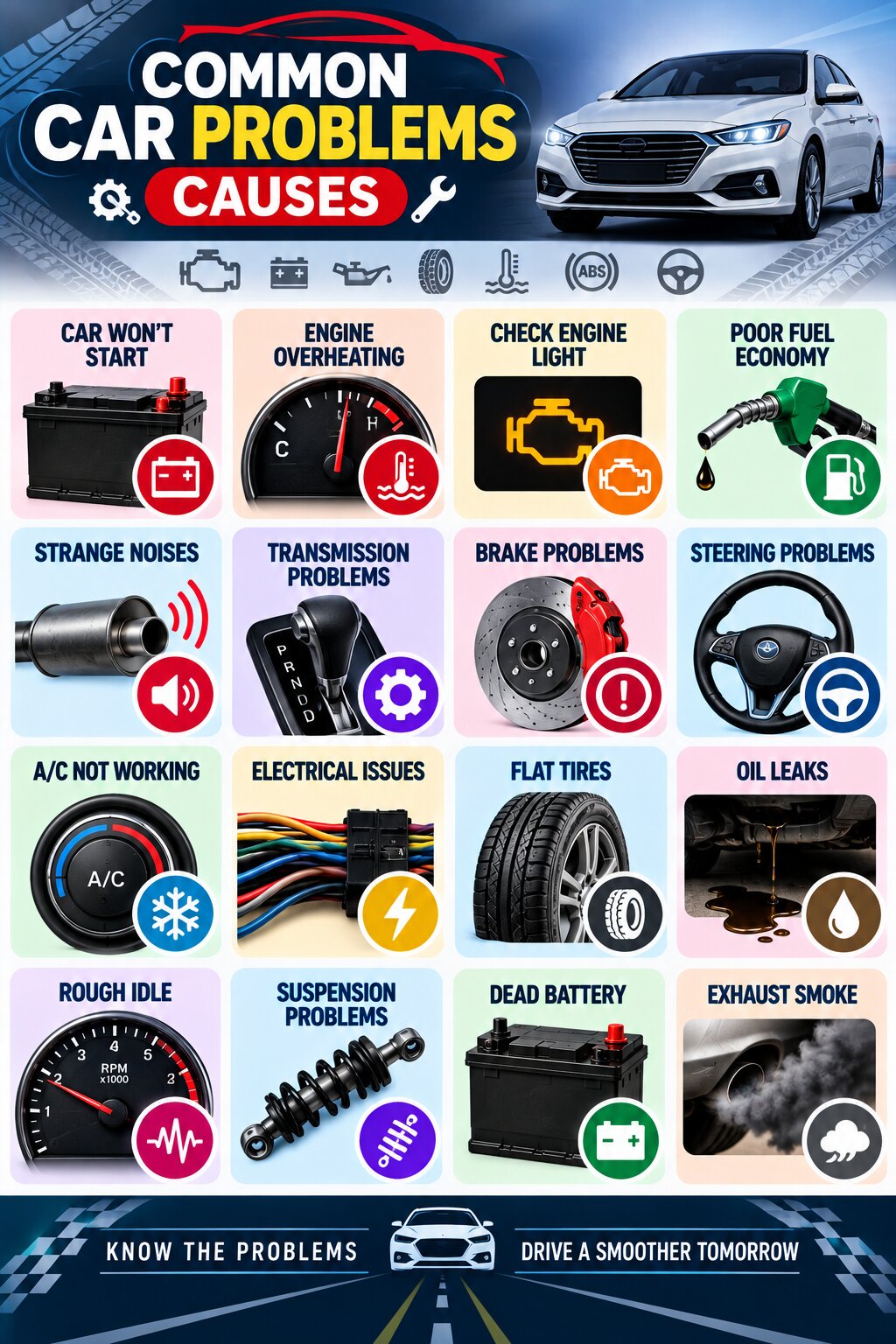
Common Car Problem Warning Signs
Watch for these signs:
- Warning lights
- Strange noises
- Fluid leaks
- Burning smells
- Excessive smoke
- Vibrations
- Hard starting
- Poor fuel economy
- Rough shifting
- Weak brakes
Most major repairs begin as minor symptoms that worsen over time.
Preventive Maintenance Checklist
Monthly
- Check tire pressure
- Check fluid levels
- Inspect lights
- Look for leaks
Every 5,000–10,000 Miles
- Oil change
- Tire rotation
- Brake inspection
Every 30,000–60,000 Miles
- Replace filters
- Inspect belts
- Service transmission if recommended
Every 100,000 Miles
- Spark plug replacement
- Cooling system inspection
- Major maintenance review
Frequently Asked Questions
What is the most common car problem?
Dead batteries and check engine lights are among the most commonly reported vehicle issues. (AAA International Relations)
What is the most expensive car repair?
Major engine and transmission failures are typically among the costliest repairs.
What warning light should never be ignored?
A flashing check engine light, low oil pressure warning, brake warning light, or overheating warning should be addressed immediately.
What causes a car to vibrate while driving?
Common causes include tire imbalance, wheel bearing problems, suspension wear, brake issues, and driveline faults.
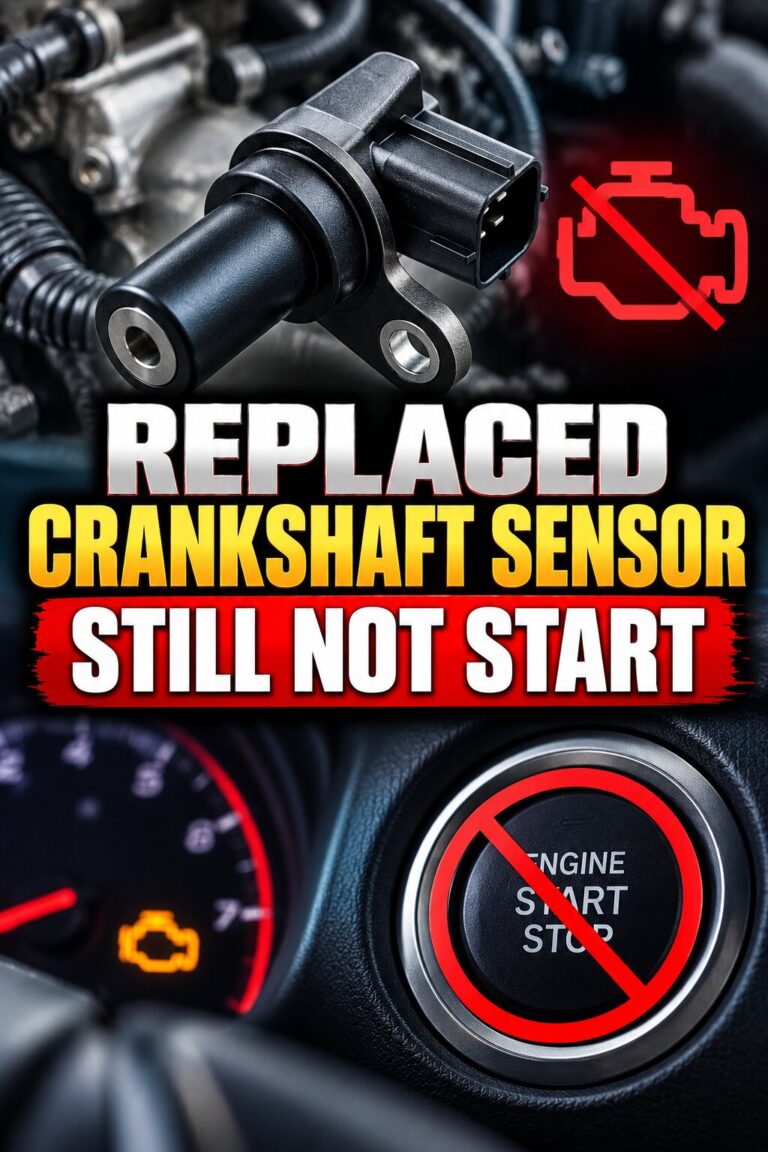
Why won’t my car start?
Common causes include a dead battery, bad starter, fuel delivery issues, ignition problems, or electrical faults. (Carfax)
How can I reduce repair costs?
Regular maintenance, early diagnosis, and prompt repairs help prevent minor problems from becoming expensive failures. (Consumer Advice)
Conclusion
Every vehicle eventually develops problems, but understanding the most common car issues helps drivers recognize warning signs before they become major repairs. Battery failures, brake wear, overheating, fluid leaks, transmission concerns, suspension wear, and electrical faults are among the most common automotive problems.
By following a preventive maintenance schedule and addressing symptoms early, drivers can improve reliability, reduce ownership costs, and avoid unexpected breakdowns. Regular inspections, timely repairs, and proper maintenance remain the most effective ways to keep any vehicle running safely and efficiently for years to come.