Modern vehicles are packed with technology designed to improve fuel economy, reduce emissions, and enhance performance. One component many drivers never notice until something goes wrong is the active grille shutter system.
If you’ve seen a dashboard message such as “Grille Shutter Malfunction,” “Active Grille Shutter Error,” “Service Active Grille Shutter,” or a Check Engine Light accompanied by trouble code P059F, you’re dealing with a problem in the vehicle’s airflow management system. Active grille shutters are commonly found on vehicles from Ford, Chevrolet, GMC, Cadillac, Toyota, Honda, Acura, Jeep, Chrysler, BMW, and several other manufacturers.
While a grille shutter malfunction may seem minor, ignoring it can lead to reduced fuel economy, longer engine warm-up times, cooling system issues, or even engine overheating in some cases.
This guide explains how active grille shutters work, what causes them to fail, common symptoms, diagnostic procedures, repair options, and expected repair costs.
What Is an Active Grille Shutter?
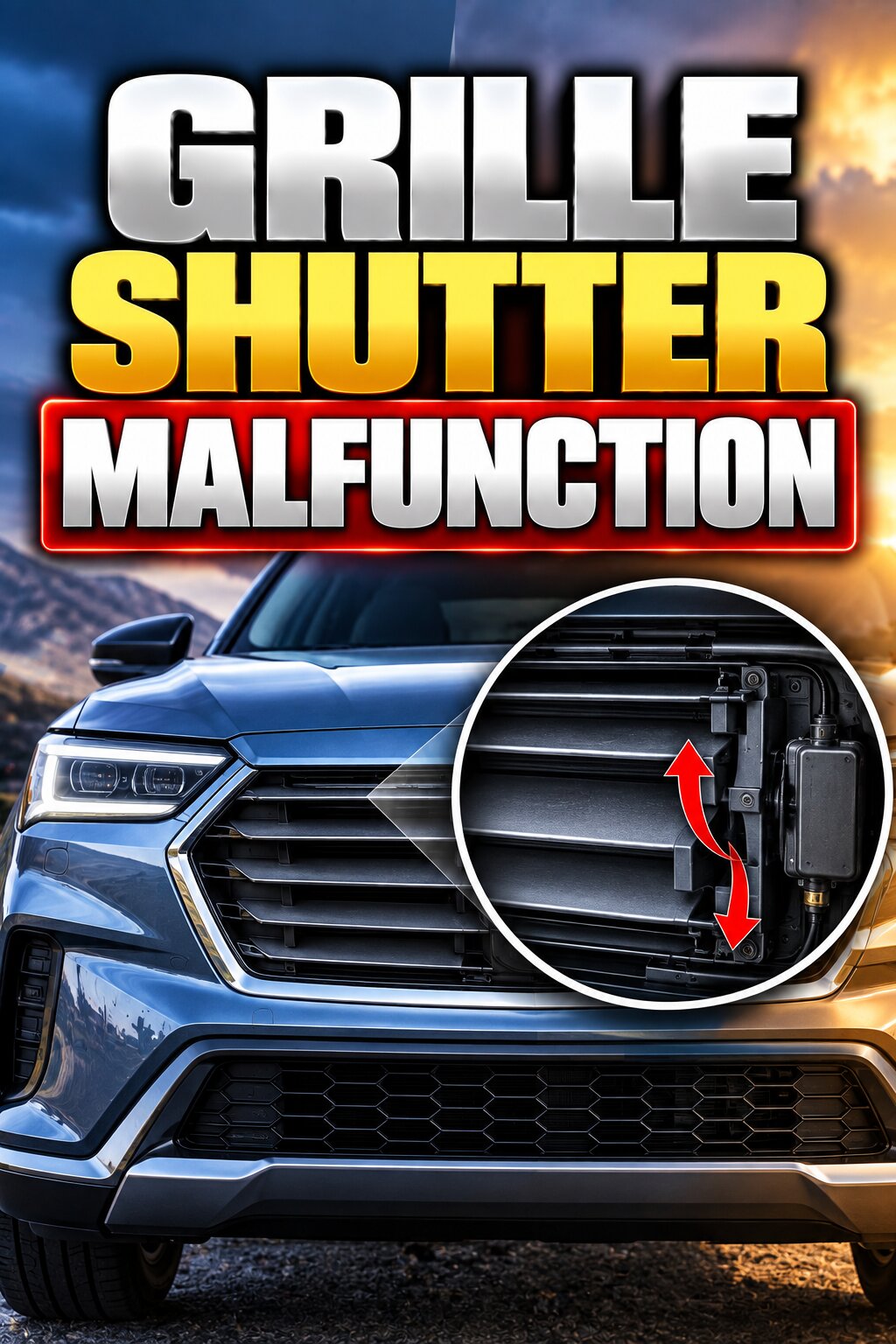
An active grille shutter (AGS) system consists of motorized louvers located behind the vehicle’s front grille.
The system automatically opens and closes based on:
- Engine temperature
- Vehicle speed
- Air conditioning demands
- Ambient temperature
- Cooling system requirements
When extra cooling is needed, the shutters open to allow airflow through the radiator and condenser. When cooling demand is low, the shutters close to improve aerodynamics and help the engine reach operating temperature faster.
Why Manufacturers Use Active Grille Shutters
Automakers use grille shutters for several reasons:
Improved Fuel Economy
Closing the shutters reduces aerodynamic drag.
Even a small reduction in drag can improve fuel efficiency, especially during highway driving.
Faster Engine Warm-Up
Closed shutters restrict airflow during cold starts.
This allows the engine to reach operating temperature more quickly, improving efficiency and reducing emissions.
Better Temperature Control
The system helps maintain optimal engine and transmission temperatures under varying conditions.
Reduced Wind Noise
Some manufacturers also use grille shutters to reduce airflow turbulence around the vehicle.
Symptoms of a Grille Shutter Malfunction
A failing grille shutter system usually provides several warning signs.
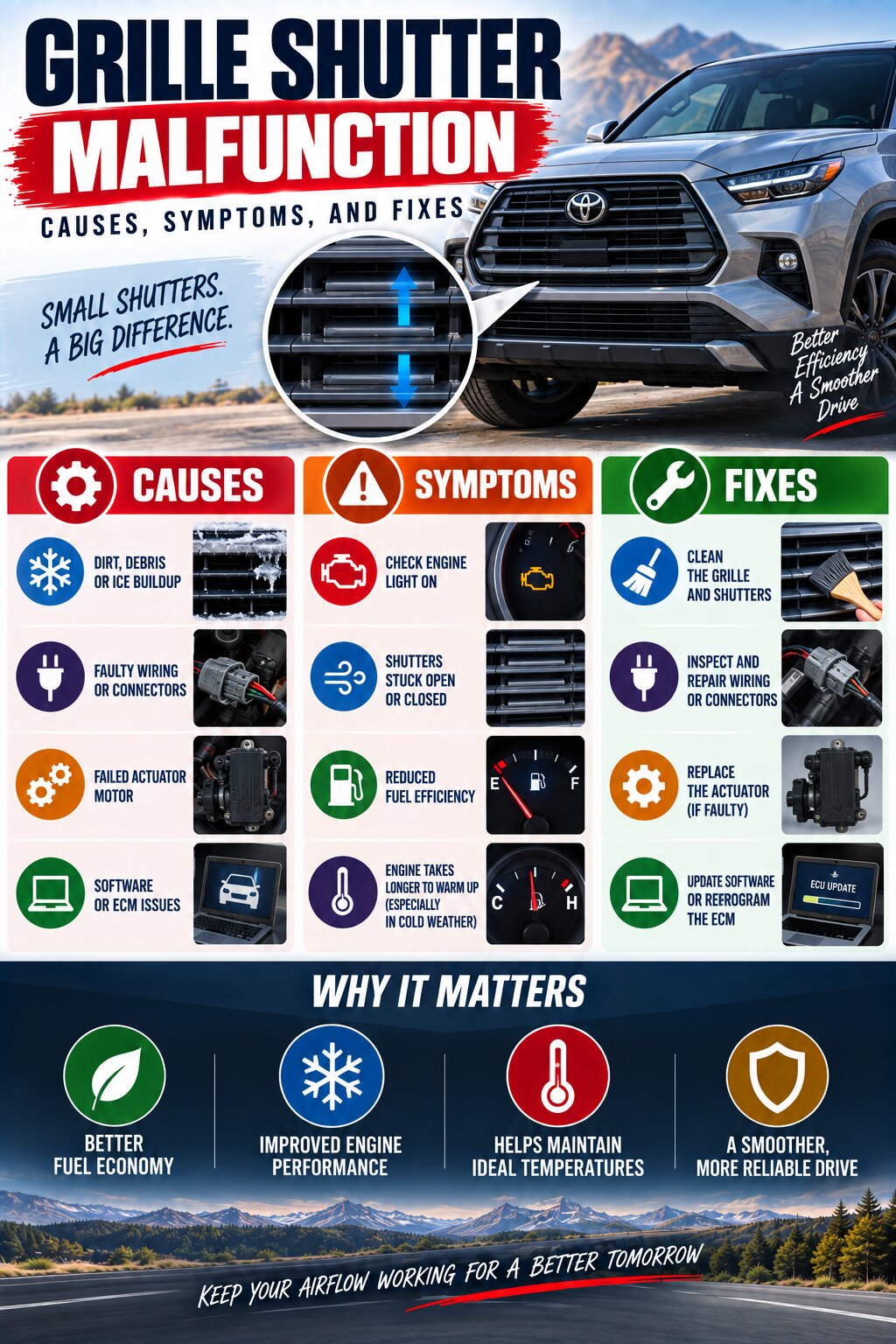
Check Engine Light
The most common symptom is an illuminated Check Engine Light.
The vehicle’s computer monitors shutter position and movement. If the shutters fail to reach the commanded position, a fault code is stored.
Dashboard Warning Message
Some vehicles display messages such as:
- Active Grille Shutter Malfunction
- Service Grille Shutter
- Grille Shutter Inoperative
- Cooling System Warning
Engine Overheating
If the shutters become stuck closed, airflow to the radiator may be restricted.
This can lead to:
- High coolant temperatures
- Overheating in traffic
- Cooling system warnings
Severe overheating can eventually cause engine damage.
Poor Fuel Economy
If the shutters remain open continuously, aerodynamic efficiency decreases.
Drivers may notice a small reduction in fuel economy, especially at highway speeds.
Engine Takes Longer to Warm Up
Stuck-open shutters may prevent the engine from warming efficiently during cold weather. This can also reduce cabin heater performance.
Clicking or Grinding Noises
Damaged actuators or jammed shutters may create:
- Clicking sounds
- Grinding noises
- Buzzing noises
These sounds often come from behind the front grille.
Common Causes of Grille Shutter Failure
Failed Actuator Motor
The actuator motor is responsible for opening and closing the shutters.
Over time, the motor may fail because of:
- Internal wear
- Water intrusion
- Gear damage
- Electrical faults
Actuator failure is one of the most common causes of grille shutter malfunction.
Broken Shutter Louvers
The shutters themselves are often made from lightweight plastic.
Road debris, impacts, and age can cause:
- Broken louvers
- Cracked slats
- Bent blades
Physical damage frequently prevents proper operation.
Road Debris Obstruction
Leaves, dirt, rocks, snow, and ice can become lodged inside the shutter assembly.
This may prevent the louvers from moving freely.
Wiring Problems
Because the system is mounted near the front bumper, wiring is exposed to:
- Moisture
- Salt
- Road debris
- Physical damage
Damaged wiring can prevent communication between the actuator and control module.
Position Sensor Failure
Most systems include sensors that report shutter position to the engine control module.
When a sensor provides inaccurate data, the computer may believe the shutters are malfunctioning even if they are physically moving.
Front-End Collision Damage
Even minor parking lot impacts can damage:
- Louvers
- Linkages
- Mounting brackets
- Actuator housings
Many grille shutter failures occur after front-end contact.
Software Issues
Some manufacturers have released software updates and technical service bulletins addressing false shutter-related codes or calibration issues.
Common Diagnostic Trouble Codes
Several OBD-II codes are commonly associated with grille shutter problems.
| Code | Description |
|---|---|
| P059F | Active Grille Air Shutter Performance/Stuck Off |
| P05A0 | Active Grille Air Shutter Performance |
| P05AE | Active Grille Air Shutter Range/Performance |
| U0284 | Lost Communication with Grille Shutter Module |
| U0585 | Invalid Data from Active Grille Shutter Module |
These codes help narrow down the source of the problem.
How to Diagnose a Grille Shutter Malfunction
Step 1: Scan for Codes
Use an OBD-II scanner to retrieve fault codes.
Codes such as P059F often point directly to the grille shutter system.
Step 2: Inspect the Shutters
Look through the grille for:
- Broken louvers
- Debris buildup
- Bent components
- Misaligned blades
Step 3: Listen for Actuator Operation
During startup, some systems perform a self-test.
Listen for:
- Motor movement
- Clicking
- Grinding
Unusual noises may indicate actuator failure.
Step 4: Check Wiring
Inspect:
- Connectors
- Harnesses
- Ground points
Look for corrosion or damage.
Step 5: Perform Actuator Testing
Advanced scan tools can command the shutters to open and close.
If the motor responds inconsistently, replacement may be necessary.
How to Fix a Grille Shutter Malfunction
Remove Debris
If dirt, leaves, or ice are blocking movement:
- Clean the assembly
- Remove obstructions
- Retest operation
This is often the simplest repair.
Repair Wiring
Damaged wiring should be repaired using weatherproof connections.
Proper routing helps prevent future failures.
Replace the Actuator
If the motor has failed, replacement is usually required.
Some vehicles allow separate actuator replacement, while others require replacing the entire assembly.
Replace the Entire Grille Shutter Assembly
Many manufacturers sell the shutter system as a complete unit.
This is often necessary when:
- Louvers are broken
- Linkages are damaged
- Internal gears fail
Perform Calibration
After repairs, some vehicles require:
- Calibration
- Initialization
- Relearn procedures
Skipping this step may trigger repeat fault codes.
Can You Drive with a Grille Shutter Malfunction?
It depends on the failure.
If Stuck Open
You can often continue driving safely, though you may experience:
- Reduced fuel economy
- Longer warm-up times
- Less efficient climate control
If Stuck Closed
Driving becomes much riskier.
Restricted airflow may lead to:
- Engine overheating
- Cooling system stress
- Potential engine damage
Repairs should be completed as soon as possible.
Repair Costs
| Repair | Typical Cost |
|---|---|
| Debris Removal | $0–$100 |
| Wiring Repair | $100–$400 |
| Actuator Replacement | $200–$700 |
| Complete Shutter Assembly | $300–$1,200 |
| Dealer Diagnostics | $100–$250 |
Costs vary significantly by vehicle make and model.
Preventing Future Grille Shutter Problems
Keep the Front Grille Clean
Remove:
- Leaves
- Mud
- Snow
- Ice
before they obstruct shutter movement.
Avoid Minor Impacts
Even low-speed impacts can damage delicate shutter components.
Inspect During Routine Maintenance
Ask technicians to inspect the grille shutter assembly during service visits.
Address Warning Lights Quickly
Small issues can become larger and more expensive if ignored.
Frequently Asked Questions
What does a grille shutter malfunction mean?
It means the active grille shutter system cannot move to the commanded position or is reporting incorrect position data.
Is a grille shutter malfunction serious?
It can be. A shutter stuck closed may restrict cooling airflow and lead to overheating.
What causes code P059F?
P059F usually indicates the grille shutter is stuck, obstructed, damaged, or experiencing actuator failure.
Can I drive with a grille shutter warning?
If the shutters are stuck open, short-term driving is often possible. If they are stuck closed and temperatures rise, repairs should be performed immediately.
How much does grille shutter replacement cost?
Most repairs range from $300 to $1,200 depending on the vehicle and extent of damage.
Conclusion
A grille shutter malfunction may seem like a minor warning, but the active grille shutter system plays an important role in fuel economy, emissions reduction, engine warm-up, and cooling performance. Common causes include failed actuators, broken louvers, wiring faults, debris obstruction, sensor problems, and collision damage.
Fortunately, most issues can be diagnosed quickly using fault codes, visual inspections, and actuator testing. Addressing the problem early can prevent overheating, restore fuel efficiency, and avoid more expensive repairs later.