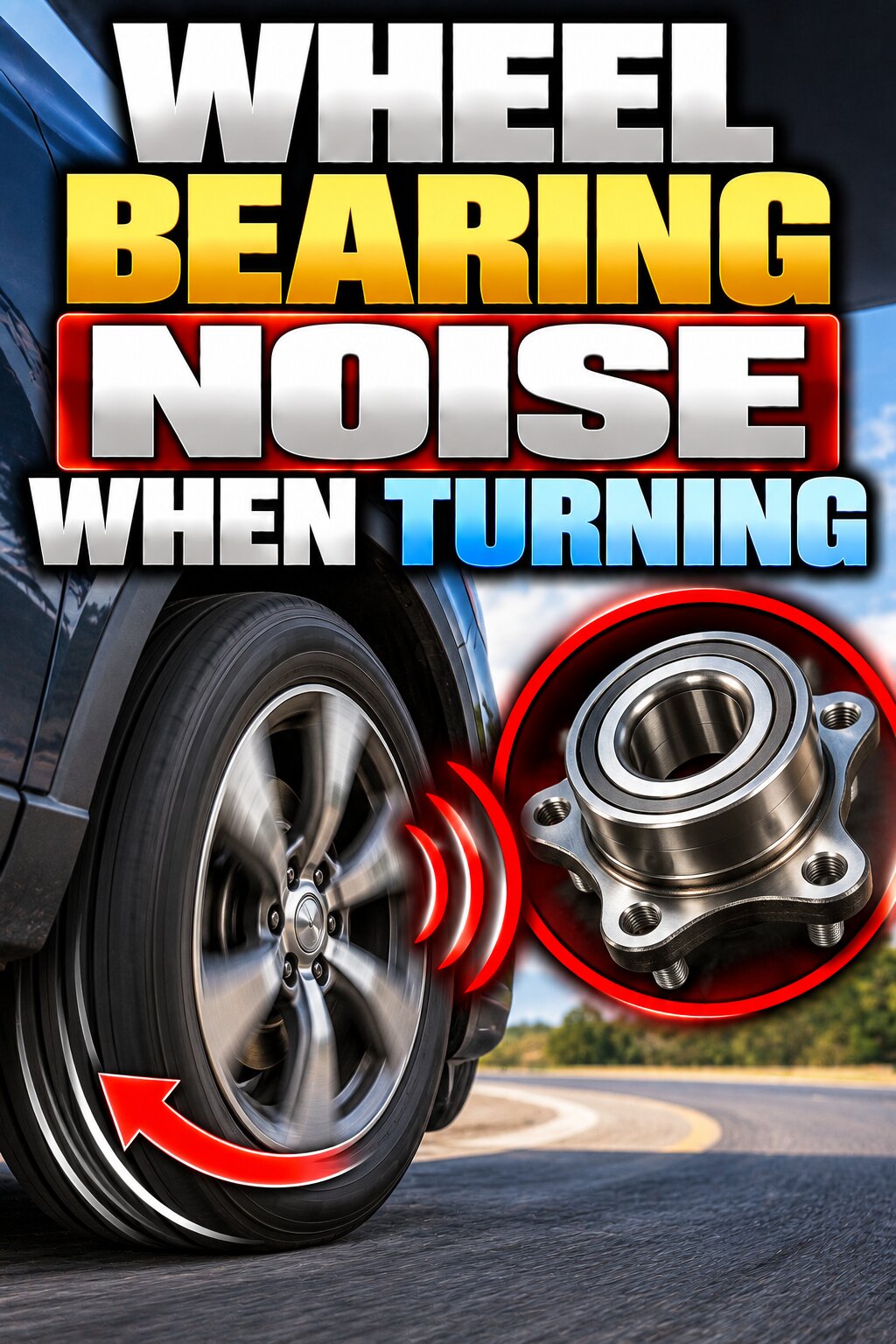
Wheel bearing noise is one of the most commonly misdiagnosed vehicle problems. Many drivers assume a humming, growling, or grinding sound during turns automatically means a bad wheel bearing. While wheel bearings are often the culprit, tire issues, CV joints, brakes, and suspension components can create similar symptoms.
A failing wheel bearing can affect handling, increase tire wear, damage hub assemblies, and in severe cases compromise vehicle safety. The key is identifying the problem early before expensive secondary damage occurs.
This guide explains why wheel bearing noise changes when turning, how to identify the bad side, common causes, model-specific issues, diagnostic procedures, repair costs, and prevention tips.
What Does Wheel Bearing Noise Sound Like?
Most drivers describe wheel bearing noise as:
- Humming noise
- Growling sound
- Rumbling noise
- Grinding sound
- Drone-like sound
- Whirring sound
Unlike engine noises, wheel bearing sounds typically increase with vehicle speed rather than engine RPM. A common clue is that the sound continues even when coasting in neutral.
Early Stage Symptoms
At first, you may notice:
- Light humming at highway speeds
- Noise only on smooth pavement
- Slight changes when turning
Moderate Stage Symptoms
As wear progresses:
- Louder growling noise
- Steering wheel vibration
- Increased road noise
- Noticeable sound during turns
Severe Stage Symptoms
In advanced cases:
- Grinding noises
- Wheel play
- ABS warning lights
- Vehicle instability
- Tire wear issues
Severely worn bearings can eventually damage hubs, axles, and braking components.
Why Does a Wheel Bearing Get Noisy When Turning?
The answer is simple: load transfer.
When a vehicle turns, weight shifts to the outside wheels. This extra load presses harder on the wheel bearing.
If the bearing contains worn races, pitted rollers, or damaged grease, the added load makes the noise louder.
Example
During a left turn:
- Vehicle weight shifts to the right side.
- Right-side wheel bearings carry more load.
- A damaged right bearing often becomes louder.
During a right turn:
- Vehicle weight shifts to the left side.
- Left-side wheel bearings carry more load.
- A damaged left bearing often becomes louder.
This rule helps technicians narrow down the faulty side.
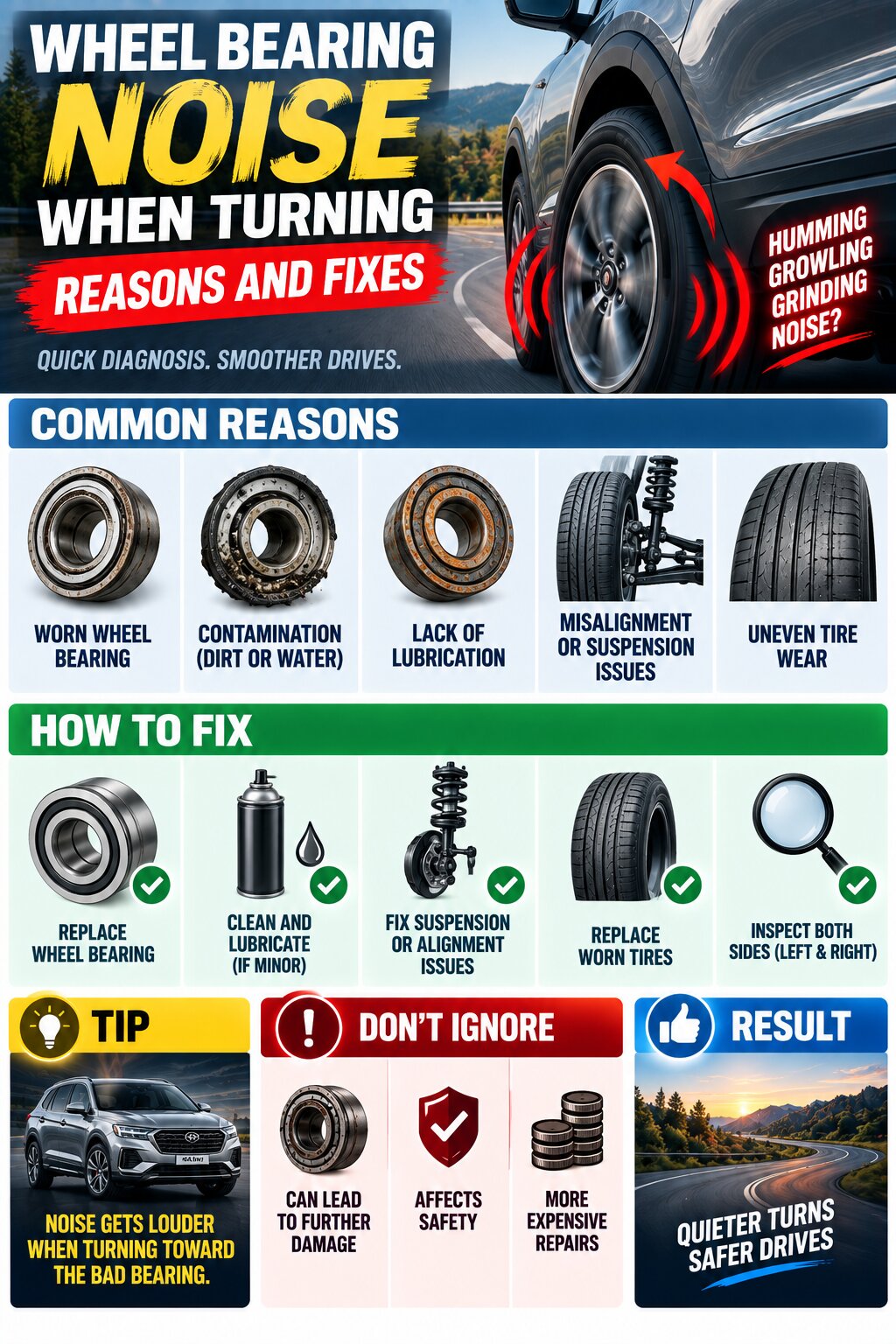
Common Reasons for Wheel Bearing Noise When Turning
Normal Wear and Tear
The most common cause is simple wear.
Wheel bearings contain:
- Steel rollers
- Precision races
- Grease lubrication
- Protective seals
Over time:
- Grease degrades
- Metal surfaces wear
- Microscopic pitting develops
Eventually noise begins.
Modern wheel bearings often last 80,000 to 150,000 miles, but lifespan varies significantly.
Water Intrusion
Water is one of the biggest enemies of wheel bearings.
Common sources include:
- Flooded roads
- Deep puddles
- Pressure washing
- Damaged seals
Water contamination causes:
- Rust formation
- Grease breakdown
- Accelerated wear
Pothole and Impact Damage
A severe pothole strike can damage:
- Wheel bearings
- Hub assemblies
- Suspension components
The impact may create bearing preload issues or internal race damage.
Improper Installation
Incorrect installation can shorten bearing life dramatically.
Common mistakes include:
- Incorrect torque specifications
- Hammer installation
- Misalignment
- Contamination during installation
Overloading
Consistently carrying heavy loads increases bearing stress.
Examples include:
- Towing heavy trailers
- Overloaded trucks
- Commercial use
Corrosion
Vehicles driven in snowy climates experience increased exposure to:
- Road salt
- Moisture
- Corrosion
Rust can eventually compromise seals and bearing surfaces.
Problems Often Mistaken for Wheel Bearing Noise
Tire Noise
Uneven tire wear frequently mimics wheel bearing failure.
Common tire issues include:
- Cupping
- Feathering
- Belt separation
- Aggressive tread patterns
Tire noise often changes with road surface more than steering input.
CV Joint Problems
A bad outer CV joint usually creates:
- Clicking
- Popping
- Snapping
especially during tight turns.
Wheel bearings typically produce continuous humming or growling instead.
Brake Issues
Brake-related noises may include:
- Scraping
- Squealing
- Grinding
Unlike bearing noise, brake sounds often change when applying the brake pedal.
Differential Problems
A worn differential may produce:
- Whining
- Gear noise
- Driveline vibration
Differential noise usually changes with throttle position rather than turning.
How to Identify Which Bearing Is Bad
Left Turn Test
If the noise becomes louder when turning left:
- The right-side bearing is often suspect.
Right Turn Test
If the noise becomes louder when turning right:
- The left-side bearing is often suspect.
This is one of the oldest and most reliable diagnostic techniques.
Vehicle Models Known for Wheel Bearing Issues
Ford F-150
Common symptoms:
- Front hub humming
- Highway-speed drone
- Steering vibration
Often appears between 80,000 and 150,000 miles.
Ford F-250 and F-350
Heavy-duty trucks place significant loads on bearings.
Common causes include:
- Towing
- Oversized tires
- Off-road use
Chevrolet Silverado
Silverado owners frequently report:
- Front hub assembly failures
- ABS warning lights
- Wheel speed sensor faults
GMC Sierra
Symptoms mirror Silverado models because many components are shared.
Toyota Tacoma
Known symptoms include:
- Front wheel humming
- Off-road wear
- Mud and water contamination
Toyota Tundra
Heavy towing loads can accelerate bearing wear.
Toyota 4Runner
Common issues:
- Front bearing noise
- Off-road contamination
- Hub wear
Honda CR-V
Some owners report:
- Rear wheel bearing failures
- Highway-speed humming
- Progressive noise increase
Honda Accord
Common signs include:
- Rear bearing noise
- Steering-related sound changes
Subaru Outback
Subaru models have developed a reputation for rear wheel bearing replacements.
Common symptoms:
- Rear humming noise
- Noise increasing with speed
- Early bearing wear
Subaru Forester
Many owners report rear bearing replacements before 120,000 miles.
Jeep Grand Cherokee
Heavy vehicle weight contributes to bearing stress.
Nissan Rogue
Common complaints include:
- Front wheel humming
- Hub assembly failures
- ABS sensor issues
BMW X5
Symptoms often include:
- Front bearing growl
- Steering vibration
- Hub assembly wear
Mercedes-Benz GLE
Wheel bearing wear may become noticeable during highway cruising.
How to Diagnose Wheel Bearing Noise
Road Test
The first diagnostic step is a controlled road test.
Observe:
- Noise changes with speed
- Noise changes during turns
- Noise during acceleration
- Noise during braking
Jack-Up Inspection
Raise the vehicle safely.
Check for:
- Wheel play
- Roughness
- Excessive movement
Grasp the tire at:
- 12 and 6 o’clock positions
- 9 and 3 o’clock positions
Excessive movement may indicate bearing wear.
Spin Test
Rotate the wheel by hand.
A healthy bearing should:
- Feel smooth
- Rotate quietly
- Have minimal resistance
Grinding or roughness often indicates internal damage.
Temperature Test
After driving:
- Compare wheel hub temperatures.
A failing bearing may run noticeably hotter than the opposite side.
How to Fix Wheel Bearing Noise
Replace the Bearing
Most modern vehicles use sealed bearings.
Repair generally involves:
- Bearing replacement
- Hub assembly replacement
Replace Hub Assemblies
Many newer vehicles integrate:
- Bearing
- Wheel speed sensor
- Hub
into a single unit.
Inspect Related Components
Always inspect:
- Axles
- Suspension
- Brakes
- Tires
These components may contribute to similar symptoms.
Typical Repair Costs
| Vehicle Type | Typical Cost |
|---|---|
| Compact Cars | $200-$500 |
| Mid-Size Sedans | $250-$700 |
| SUVs | $300-$900 |
| Half-Ton Trucks | $350-$1,000 |
| HD Trucks | $500-$1,500 |
Luxury vehicles often cost more.
Can You Continue Driving?
Mild Noise
Short-term driving may be possible if:
- No vibration exists
- No wheel play exists
- Noise remains mild
Severe Noise
Immediate inspection is recommended if you experience:
- Grinding
- Loose steering
- Wheel wobble
- ABS warnings
- Excessive vibration
Driving with a severely worn bearing can eventually lead to wheel or hub damage.
Prevention Tips
Avoid Deep Water
Water contamination destroys grease and promotes corrosion.
Slow Down for Potholes
Reducing impact loads extends bearing life.
Maintain Proper Tire Balance
Balanced tires reduce vibration-related stress.
Check Alignment Regularly
Poor alignment increases wheel loading.
Inspect Suspension Components
Worn suspension parts can accelerate bearing wear.
Frequently Asked Questions
Does wheel bearing noise get louder when turning?
Yes. A damaged bearing often becomes louder when turning because vehicle weight shifts onto the loaded side.
Which side is bad if noise gets louder turning left?
Typically the right-side bearing because a left turn loads the right side of the vehicle.
Can tires sound like bad wheel bearings?
Absolutely. Unevenly worn or cupped tires are one of the most common causes of misdiagnosis.
How long can I drive with a noisy wheel bearing?
It depends on severity. Mild noise may persist for thousands of miles, but severe grinding or looseness requires immediate repair.
Does a wheel bearing make noise during acceleration?
Usually no. Wheel bearing noise follows vehicle speed rather than engine load or throttle position.
Conclusion
Wheel bearing noise when turning is usually caused by bearing wear, contamination, impact damage, or lubrication failure. The classic symptom is a humming, growling, or grinding sound that changes as weight transfers from one side of the vehicle to the other during turns.
While wheel bearings are common culprits, tires, CV joints, brakes, and drivetrain components can create similar noises. Proper diagnosis through road testing, wheel inspections, and hub checks is essential before replacing parts. Addressing the issue early can prevent costly hub, ABS, suspension, and tire damage while maintaining vehicle safety and reliability.